How to Organize a Dorm Room with No Closet Space
How to organize a dorm room with no closet space can feel like an impossible challenge at first. Many dorm rooms provide only a small wardrobe, a single hanging rail, or no dedicated clothing storage at all. Without a system, clothes end up on chairs, shoes collect near the door, and the room quickly feels cluttered.
The good new is that you don’t need a traditional closet to keep a dorm room organized. With the right combination of vertical storage, under-bed storage, clothing rails, and compact drawer units, you can create a complete clothing storage system that works just as well as a closet.
This post covers the practical solutions that make the biggest difference when closet space is limited or nonexistent.
Assess What You Are Actually Working With
Before buying anything, look carefully at what the room provides. A poorly organized closet requires a different solution from no closet at all. If there is a closet or wardrobe, even a small one, the first step is to make it work as hard as possible before adding anything outside it.
Many dorm wardrobes appear small but can hold far more than expected when configured properly. A second hanging rail, shelf organizers, and an over-door organizer can significantly increase capacity before additional furniture is needed.
If the room genuinely has no closet space, the goal is to create a dedicated clothing zone rather than scattering storage throughout the room
Create a Dedicated Clothing Zone
One of the biggest mistakes students make is storing clothing wherever space happens to be available. A clothing rail in one corner, shoes by the door, folded clothes under the bed, and accessories scattered around the desk quickly make the room feel disorganized.
Instead, keep clothing storage concentrated in one area whenever possible. Position the clothing rail, drawers, shoe storage, and accessories together so they function like a replacement closet. Creating a single dressing zone makes the room easier to use and prevents storage from spreading into study and sleeping areas.
Clothing Rail Solutions
A clothing rail is the simplest replacement for a traditional closet. It handles hanging clothes, requires no installation, and works in almost any dorm room layout.
Freestanding clothing rails
A freestanding rail is affordable, portable, and easy to position against a short wall or in a corner. It works best when limited to everyday clothing rather than an entire wardrobe. Overcrowding it creates visual clutter and makes the room feel smaller.
Corner clothing rails
Corner clothing rails take advantage of space that often goes unused. By extending along two walls rather than one, they provide more hanging capacity while keeping the center of the room clear.
Portable wardrobe frames
A portable fabric wardrobe provides a hanging rail, a shelf above it, and a floor section for shoes in one contained unit. It hides the contents, which reduces visual clutter compared to an open rail.
Making Open Clothing Storage Look Intentional
An open clothing rail only works when it looks organized. Matching slim hangers instantly creates a cleaner appearance while allowing more clothes to fit on the same rail.
Additionally, organizing garments by category and then by color makes the rail easier to use and better to look at.
A small rug underneath the rail or a light above can further define the clothing zone clearly and make it feel like part of the room’s design rather than a storage workaround.
Folded Clothing Without a Dresser
A clothing rail handles hanging items but does nothing for folded clothing, underwear, knitwear and the rest. These need drawer storage, and in a dorm room without a closet that storage has to be compact and positioned carefully.
Stackable drawers
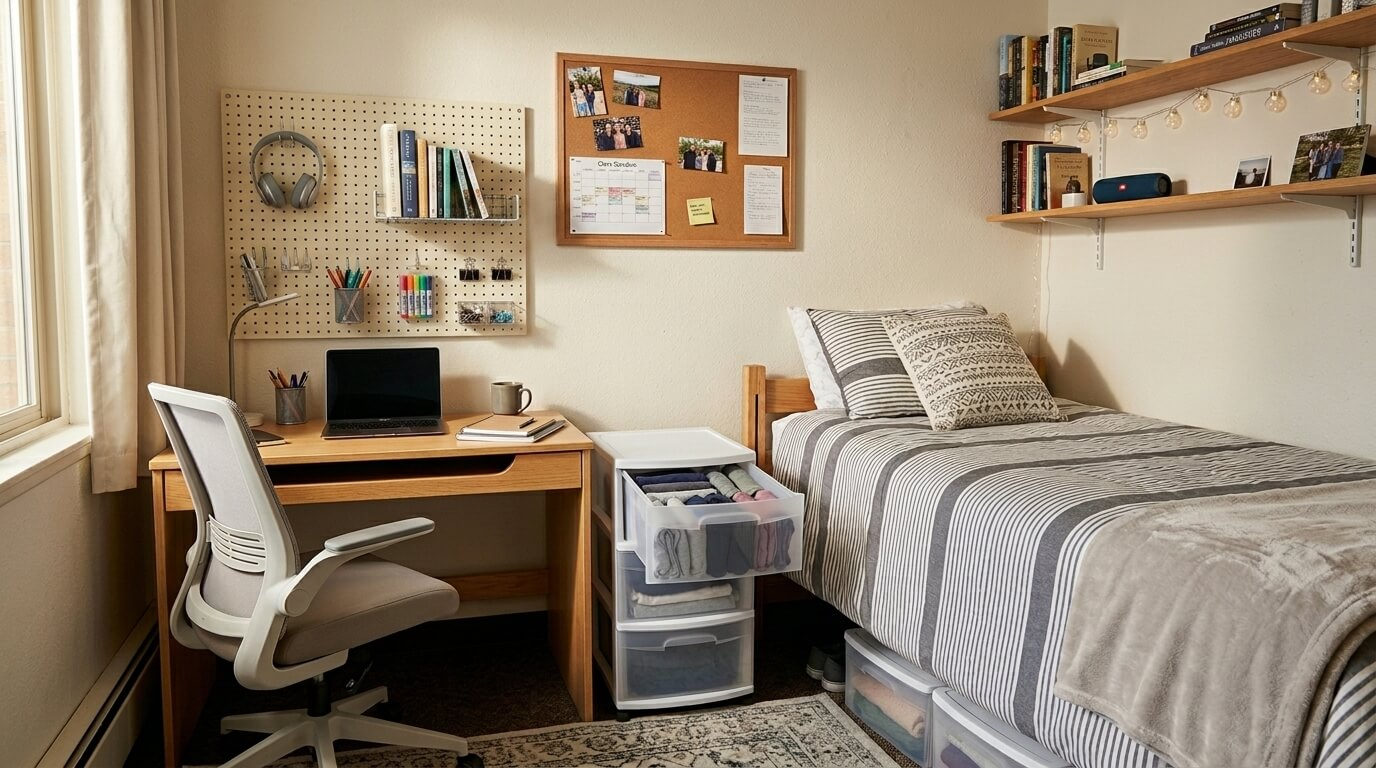
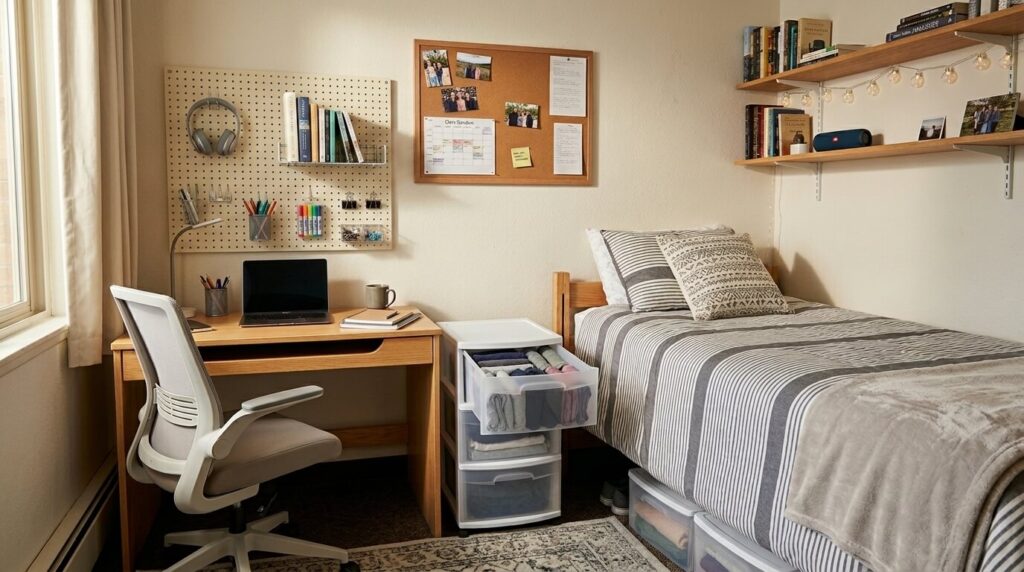
Slim stackable drawer units fit in the gap beside the wardrobe, under the desk, or in any corner that isn’t being used. Stack vertically rather than outward preserves valuable floor space while providing storage for everyday clothing.
For units that fit most dorm room layouts, the post on the best stackable storage drawers for dorm rooms covers dimensions and configurations.
Under-bed drawer storage
The space under the bed is one of the most useful storage zones in any dorm room. Flat drawer units on wheels or storage bins can comfortably hold folded clothing while keeping it accessible and out of sight.
Cube storage with fabric inserts
A cube storage unit fitted with fabric drawer inserts offer flexibility that traditional furniture often lacks. Some cubes can hold clothing while others store bags, supplies or personal items, allowing the unit to adapt as needs change.
Store Shoes Off the Floor
Shoes scattered near the door are one of the fastest ways to make a dorm room feel disorganized.
Over-door shoe organizers
A clear-pocket over-door shoe organizer on the back of the room door or the wardrobe, a space that would otherwise sit empty, holds a pair per pocket and keeps every pair visible
Wall-mounted shoe shelves
Where permitted, wall-mounted shoe shelves keep footwear accessible without taking up floor space. In a dorm room where drilling isn’t allowed, adhesive-mounted shoe shelves rated for the weight of footwear are the practical alternative.
Under-bed shoe storage
Flat under-bed shoe boxes handle pairs not in daily rotation. Out-of-season shoes, formal footwear and backup pairs store well here and free up accessible storage for what’s being worn regularly.
Use the Back of the Door
The back of the main dorm room door is one of the most productive storage surfaces in the room. It requires no drilling, no wall damage and no floor space.
An over-door organizer with multiple pockets handles accessories, toiletries and small supplies while keeping everything visible and retrievable in seconds.
For the full range of what works on a dorm room door, the post on the best over-the-door storage ideas for small dorm rooms covers each product type with the specific considerations for dorm doors.
Over-Door Jewellery Armoire
For students who wear jewelry or accessories regularly, a mirrored over-door jewelry armoire is one of the most space efficient storage solutions available.
It combines a full-length mirror with storage for necklaces and bracelets, compartments for rings and earrings, and shelves for watches and larger pieces, while using zero space. Instead of needing a separate mirror and jewelry organizer, one product handles both jobs and keeps surfaces clear.
Use Vertical Wall Storage
When closet space is limited, the walls become valuable storage space.
A pegboard section on the wall above the desk or beside the clothing rail can hold accessories, jewellery, scarves, belts and other frequently used items. Because hooks and shelves can be rearranged, the system adapts easily throughout the academic year.
For students in a no-drill form rooms, adhesive-mounted pegboards provide many of the same benefits without damaging walls. The guide to the best dorm room pegboards for vertical storage covers the no-drill options alongside configurations that work best for accessories.
Don’t Buy Every Organizer Immediately
Many students purchase storage products before they’ve spent a week living in the room. The result is often money spent solving problems that don’t actually exist.
Start with the essentials:
- Clothing rail
- Drawer storage
- Shoe storage
- Over-door organizer
Then live in the room for a week or two before adding anything else. The real storage bottlenecks become obvious very quickly, making future purchases more targeted and useful.
Edit Before You Pack
The easiest way to create more storage space is to bring fewer things.
A dorm room with no closet space becomes much easier to manage when clothing is edited before the move-in day. Focus on the items you’ll realistically wear during the semester and leave rarely used pieces at home whenever possible.
No storage solution works well when it has to accommodate significantly more than the space was designed to hold.
Build the System Before You Unpack
A clothing rail, compact drawer storage, an over-door organizer and a shoe solution can replace nearly everything a traditional closet provides.
Set those up on move-in day before anything is unpacked and every item immediately has a home. That’s far easier than unpacking first and trying to organize around growing piles of belongings later.
For the complete dorm setup, see how to organize a small dorm room when space is limited, which covers every zone of the room from the bed and desk to vertical and daily maintenance routines.


