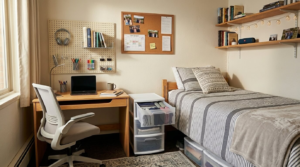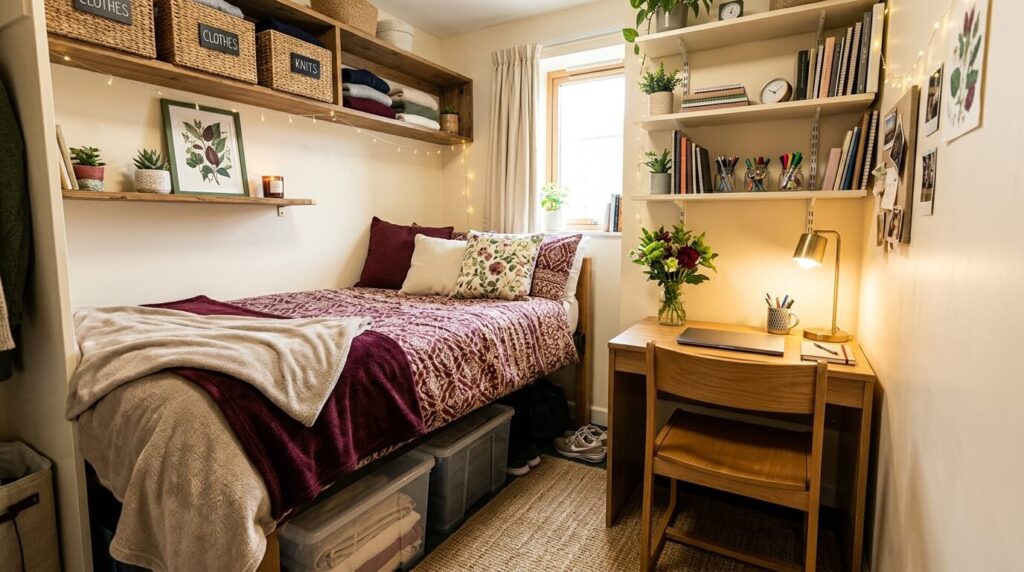
Dorm rooms are designed to be compact which means organizing a small dorm room when space is limited can feel challenging from the moment you move in. Between clothing, textbooks, bedding, study supplies, snacks and everyday essential, it’s easy for a dorm room to feel overcrowded within the first week.
The good news is that dorm room organization is less about having more storage and more about using the space strategically. Most dorm rooms have unused storage potential hiding under the bed, behind doors, above desks, and inside closets. Once those areas are working properly, the room becomes easier to study in, and much more comfortable to live in.
This guide walks through the most effective dorm room organization ideas zone by zone, focusing on the changes that make the biggest difference in a limited space.
Start Before You Unpack
The most common dorm room mistake is unpacking everything before deciding where it will live. Bags get emptied onto the bed and desk, surfaces fill up immediately, and the room feels chaotic before any organization system has been created.
Instead, set up the storage framework first. Decide where clothing, study supplies, toiletries, shoes, and bedding will be stored before opening every suitcase. Put up any shelves, hooks or organizers first, then unpack directly into those spaces.
Starting with a plan prevents clutter from taking hold on day one and makes the entire process far less overwhelming.
Create Zones Before You Fill the Room
Even the smallest dorm room functions better when it has clearly defined zones.
At minimum, most rooms need:
- A sleeping zone
- A study zone
- A clothing and storage zone
If you’re sharing the room with a roommate, clear boundaries become even more important. When belongings start drifting into shared spaces, clutter accumulates faster and staying organized becomes much harder.
Defining zones early helps every item in the room develop a logical home. It also makes daily tidying easier because you’re returning things to a specific area rather than finding a new place for them every time.
The Bed Is Your Biggest Storage Asset
In most dorm rooms, the bed takes up more floor space than anything else. That makes it either the biggest problem or the biggest storage opportunity in the room.
Loft the bed if your school allows it
If your dorm permits lofting, it is usually the single most effective space-saving upgrade available.
No shelf, storage bin, or organizer can recover as much usable space as raising the bed and reclaiming the area underneath it. Depending on the room layout, lofting can create enough space for a desk, storage drawers, a seating area, or simply the open floor space that makes a small room feel less cramped.
Check your school lofting policies, available bed configurations, and the ceiling clearance requirements.
Use every inch underneath the bed
Whether the bed is lofted or at floor level, the space underneath it is one of the most valuable storage zones in the room. Spare bedding, out-of-season clothing, shoes, extra supplies: all of these store well under the bed and free up the more visible and accessible areas of the room for what’s needed day to day.
Vacuum compression bags reduce bulky items like comforters and winter clothing to a fraction of their normal volume, which means more fits in the same space.
Add bed risers for extra clearance
If the bed can’t be lofted but the current clearance is too low for proper under-bed storage, a set of bed risers adds several inches of height to the frame and opens up the under-bed zone for flat storage boxes, rolling bins and vacuum bags.
Get Everything Off the Floor
A clear dorm room floor instantly makes a dorm room feel larger.
Getting belongings off the floor and onto the walls, doors and vertical surfaces frees up circulation space, reduces visual clutter, and makes the room easier to keep tidy.
Use hooks and shelves for everyday items
Most dorm rooms restrict drilling, but that doesn’t mean the walls can’t be used for storage. Adhesive hooks rated for the relevant weight handle bags, coats, towels, headphones and daily-use items without leaving permanent marks.
Adhesive shelf strips hold lightweight floating shelves for books, small plants and bedside essentials above the desk or beside the bed.
Every item that goes up onto a shelf or a hook is an item that isn’t taking up floor space or desk surface.
Make use of Over-door organizers
The back of the dorm room door is one of the most consistently overlooked storage surfaces in the room. An over-door pocket organizer handles shoes, toiletries, accessories, snacks and small supplies.
Students with large accessory collection may also benefit from a mirrored over-door jewelry armoire. It combines jewelry storage and a full-length mirror without using wall or floor space.
For a comprehensive look at what works best on the back of a dorm room door, the guide to the best over-the-door storage ideas for small dorm rooms covers the specific products and configurations that suit the dorm context.
Think Vertical storage instead of spreading horizontally
One of the easiest ways to improve dorm room organization is to stop spreading storage across the room and start stacking it upwards. Before adding another floor-based storage piece, ask whether the same storage could be achieved with a shelf, hook, hanging organizer, or vertical unit instead. In a small dorm room, vertical storage almost always wins.
Create a Functional Desk Zone
The desk is where most of a student’s waking hours in the dorm room are spent, and a desk that’s covered in clutter makes studying harder and the room feel more chaotic. Getting the desk zone right has a disproportionate effect on how functional the whole room feels.
The desk surface should hold only what’s actively being used. Everything else belongs on a shelf, in a drawer or in a organizer beside or above the desk. A clutter-free desk surface makes studying easier. It also improves the room’s appearance since the desk is usually one of the first things visible when entering.
For the specific storage solutions that keep a small dorm desk functional without cluttering it, the post on the best desk organizers for small dorm desks covers the options that work in the limited space a dorm desk provides.
Floating shelves or a pegboard above the desk, adds storage without increasing the desk’s footprint. Additionally, a slim rolling cart beside the desk can provide valuable additional capacity for supplies and miscellaneous items.
Maximize Closet Space
Most dorm closets are inefficiently configured by default.
A single hanging rail often leaves a significant amount of vertical space unused. Adding a second hanging rail can nearly double hanging capacity for the shorter items such as shirts, jackets, and folded trousers.
The shelf above the rail should also be used intentionally. Labeled bins or baskets work well for spare bedding, seasonal clothing, and less frequently used belongings.
Finally, don’t overlook the closet door itself. An over-door organizer can store shoes, accessories.
Plan for the Things Most Students Forget
Certain items create clutter not because they’re used frequently but because students forget to assign them a proper home.
The most common examples include:
Suitcases
The options are storing it under the bed if the clearance allows, standing it upright inside the bottom of the wardrobe, or using it as additional storage by keeping out-of-season clothing or spare bedding inside it.
Shoes
Avoid letting shoes accumulate beside the door. give every pair a designated storage location.
Spare bedding
A vacuum compression bag under the bed is the most space-efficient solution for extra bedding. An ottoman storage box at the foot of the bed handles spare throws and lighter bedding that’s used more regularly.
The Five-Minute Habit That Keeps Everything Organized
Even the best dorm room organization system falls apart without maintenance.
A simple five-minute reset each evening, prevents clutter from building up. Return items to their designated zones. Clear the desk, put away the shoes, and remove anything that has drifted onto the floor.
Because dorm rooms are so small, a few minutes of daily maintenance is usually enough to prevent the need for larger weekly reorganizing sessions.
Focus on the Biggest Wins First
When organizing a small bedroom when space is limited, the biggest improvements usually come from three changes:
- Using the bed as a storage asset
- Getting belongings off the floor
- Creating a functional desk and study area
Start there before worrying about smaller organizational details. Once those major areas are working properly, the rest of the room becomes much easier to manage and maintain throughout the school year.