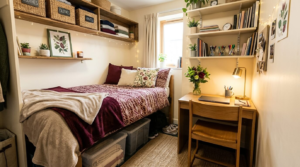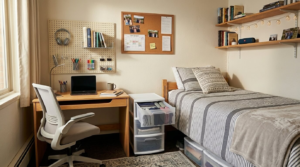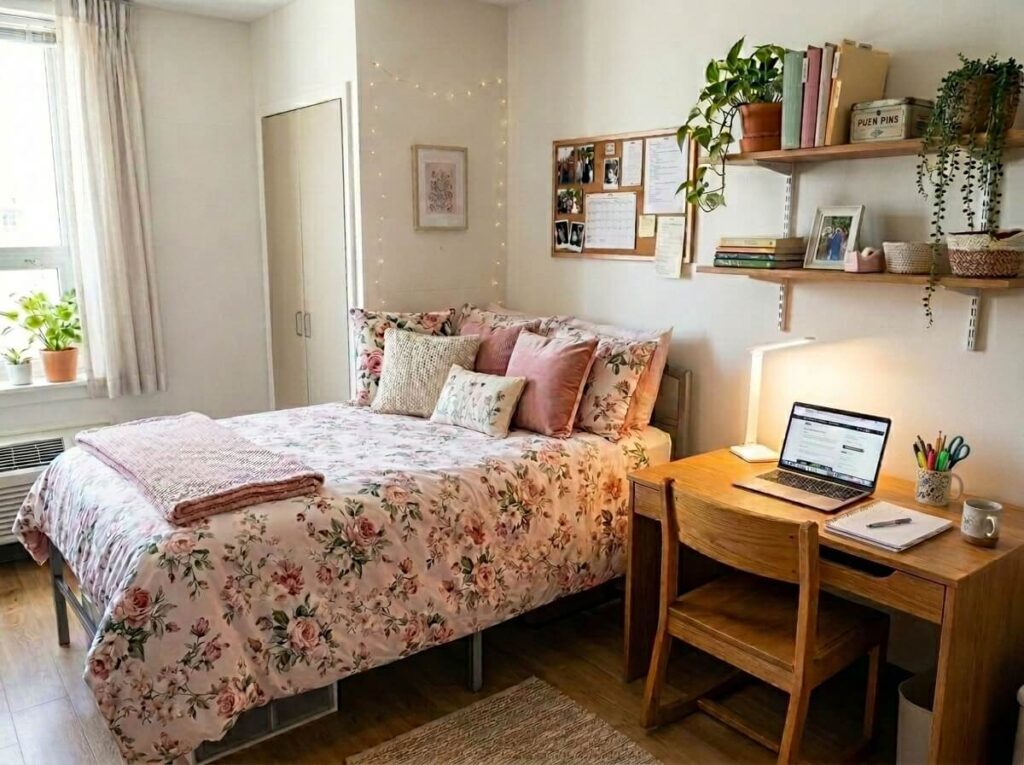
A dorm room is designed for function, not comfort. White walls, fluorescent lighting, institutional furniture, and a layout chosen for efficiency rather than personality. It’s no surprise that many students move in and immediately feel like they’re living in a temporary space.
The good news is that making a dorm room feel like home has less to do with buying décor and more to do with creating comfort, familiarity, and routines. In fact, the dorm rooms that feel most welcoming usually follow the same order:
- Make the room feel comfortable
- Make it functional
- Make it familiar
- Add personality
Students often start with decorating. In reality, a room with comfortable lighting, cozy bedding, and good organization usually feels more like home than a heavily decorated room that’s cluttered and uncomfortable.
Start with Lighting
If there’s one change that makes the biggest difference in a dorm room, it’s lighting.
Most dorm rooms rely on harsh overhead lighting that makes the room feel cold and clinical. You may not be able to remove it, but you don’t have to use it all the time.
A warm a table lamp, floor lamp or desk lamp instantly changes the atmosphere. Instead of lighting the entire room from above, use softer light sources placed around the room. Choose warm white bulbs whenever possible. The goal isn’t to make the room brighter. The goal is to make it feel more comfortable.
A small lamp beside the bed, a warm desk lamp, or subtle LED lighting behind a desk or shelf can completely change how the room feels at night.
Make Your Bed the Most Comfortable Spot in the Room
The bed is the largest surface in a dorm room and the first thing the eye lands on when the door opens. It’s also where you’ll spend more time than you expect.
Comfortable bedding does more for the feeling of home than almost any decorative item.
A comforter or duvet in a color and pattern that you genuinely like, a soft blanket, and a couple of pillows immediately make the room feel more personal.
One thing I’ve noticed in small spaces is that people often underestimate how much the bed influences the entire room. When the bed looks inviting, the whole room feels more welcoming. When the bed feels temporary, the room often feels temporary too.
Bring Familiar Things from Home
The items that make a room feel personal are rarely the expensive ones.
Photos work well because they create an immediate connection to people and places you care about. A few printed photos on the wall above the desk or beside the bed, attached with removable strips or clips, can make a new environment feel familiar surprisingly quickly. But don’t stop at photos.
A favorite mug, a blanket you’ve used for years, a lamp from your bedroom, a small keepsake from these often create a stronger feeling of comfort than brand-new decorations bought specifically for college.
Bring a few familiar pieces with you.
Create One Daily Ritual
One of the biggest mistakes that people make is assuming that home comes from objects alone.
Home also comes from routines.
The dorm room that feels settled tend to have small rituals attached to them. Maybe it’s making tea before studying. Maybe it’s turning on a lamp instead of the overhead light every evening or reading for ten minutes before bed. The object matters less than the repetition.
Familiar routines help a temporary room feel permanent because they create a sense of normalcy and ownership over the space.
Add Soft Textures wherever You Can
A dorm room is almost entirely hard surfaces: cinder block, tile, painted wood, metal bed frames. Adding soft textures balances those surfaces and makes the room feel warmer.
A small area rug, a throw blanket, fabric storage baskets, and a few pillows can significantly change both the visual feel and the comfort level of the room.
You don’t need a lot. A few well-chosen soft elements often work better than filling the room with decorative accessories.
Use Plants to Add Life
Plants bring something that furniture and décor can’t: life
A small plant on the windowsill, desk, or a shelf above the bed adds color and texture that makes the room feel less institutional and more lived in.
If maintaining a plant isn’t realistic, a high-quality faux plant can create a similar visual effect. The important thing is adding some natural texture and color to a room that might otherwise feel sterile.
Respect Shared Spaces
If you’re sharing a room, this matters more than most decorating advice. A common mistake is treating the entire room as a decorating project.
In reality, shared dorm rooms often feel more comfortable when each person focuses on creating a welcoming personal zone rather than trying to control the whole space. Make your side of the room comfortable first.
A well-organized, personalized corner usually contributes more to the feeling f home than trying to redesign every shared surface. For more ideas on organizing a shared space, see how to organize a small dorm room with a roommate.
Organize Before You Decorate
A decorated cluttered room still feels cluttered. Before buying decorations, make sure the room functions properly. Get the storage right, keep surfaces clear, give everything a designated place.
Dorm rooms that feel most comfortable aren’t necessarily the most decorated. They’re usually the ones where things are easy to find and daily life feels effortless.
If the room still feels chaotic, the storage system needs attention before the aesthetic does. The guide to how to organize a small dorm room when space is limited covers the full organizational setup. The dorm room storage ideas for tiny spaces goes deeper on every storage zone. Get those right first and the decorating becomes simple.
What Not to Bring
One of the fastest ways to make a small dorm room feel cramped is bringing too much décor.
Every additional item requires a surface to live on and adds visual clutter. Instead of filling every shelf and wall, choose a handful of things you genuinely enjoy looking at.
A few meaningful pieces usually create a stronger sense of home than dozens of decorative objects. If it doesn’t have a purpose or a designated place, it doesn’t come.
The Dorm Room Doesn’t Need to Be Perfect
It just needs to feel like it belongs to you. Start with comfortable lighting, cozy bedding, bring a few familiar items from home, create a simple daily routine, and keep the room organized.
Those five things alone do far more to make a dorm room feel like home than chasing a perfect Pinterest-worthy setup. The goal isn’t perfection. It’s creating a space that you feel comfortable walking through the door at the end of the day.