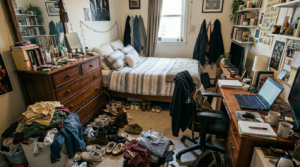
No closet means no door to close on the mess. Everything in the room is visible all the time, which makes organization less of a preference and more of a necessity. The good news is that a small bedroom without a closet that’s been planned properly is often tidier and easier to maintain than a room with a packed closet where things disappear, and clutter quietly builds behind closed doors.
The goal is not to fit more into the room. The goal is to create a system where everything has a place, daily routines feel easy, and the room stays calm without constant effort.
This guide covers the most effective ways to organize a small bedroom without a closet, from editing what you own to creating storage zones and build habits that actually last.
Start With a Ruthless Edit
No organization system performs well under the weight of too much stuff. In a small bedroom without built-in storage, that problem shows up quickly because there is nowhere to hide excess clothing, duplicate items, or things that belong elsewhere.
Before buying a single organizer or rearranging furniture, go through the clothing and belongings in the room and remove anything that:
- Isn’t worn regularly
- Doesn’t fit
- Belongs somewhere else in the home
- Is damaged beyond repair
- Exists in unnecessary duplicates
This step matters more than any product you can buy. A genuinely edited wardrobe needs far less storage than an unedited one, and every item removed is space reclaimed without spending anything.
If your bedroom feels impossible to organize no matter what you try, the problem is probably the volume. This post, how to organize a small bedroom with too much stuff get into more details on how to edit down and set up a bedroom that actually stays tidy long term.
Give Every Category of Clothing a Fixed Home
Many no-closet bedrooms stay disorganized for one simple reason: Things do not have designated homes. When everything can go anywhere, things eventually end up everywhere.
A small bedroom without a closet works best when each category of clothing has one clear storage zone.
Hanging items
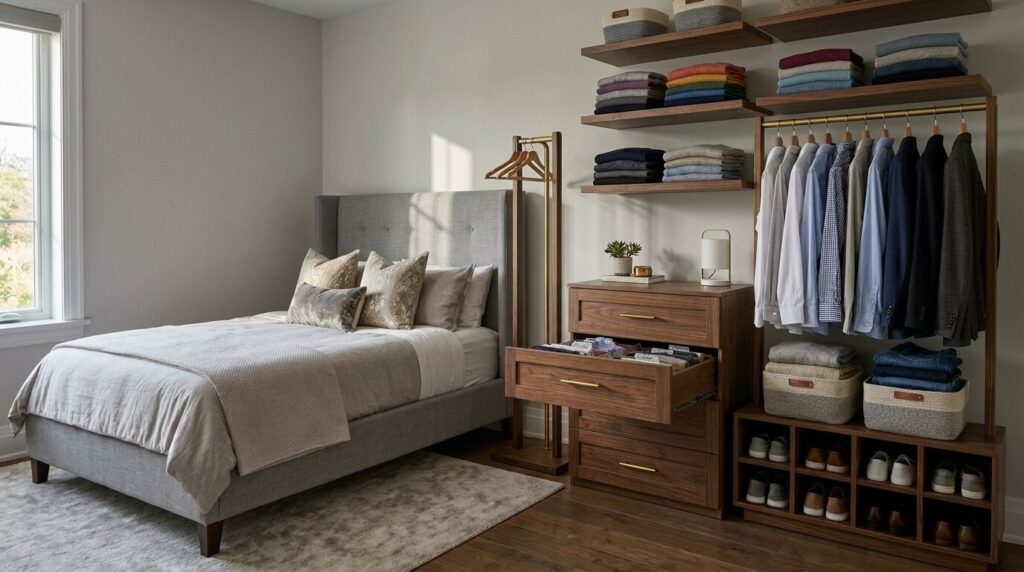
Anything that hangs goes on the rail or in the wardrobe reversed for hanging clothes like: dresses, shirts, jackets, trousers on clip hangers and blazers.
Keep the hanging zone for hanging items only. If it becomes overflow storage for random belongings, the system breaks fast. Organize by category or color so the rail stays readable at a glance.
Folded items
Knitwear, jeans, t-shirts and anything that stretches on a hanger lives in drawers or on shelves.
Folding vertically rather than horizontally, so items stand upright in the drawer rather than stacking on top of each other, means you can see everything without disturbing anything.
Shoes and accessories
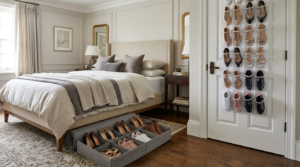
Shoes left on the floor makes a room feel chaotic. A wall-mounted shoe rack, an over-door organizer, or a slim shoe cabinet near the entrance to the room gives footwear a contained home that isn’t the floor.
Accessories such as belts, bags, and jewellery do well on hooks, in a small tray on a shelf, or in a dedicated section of a drawer.
The goal is that every item has one home.
Use Storage Zones Instead of Guesswork
A small bedroom with no closet becomes easier to maintain when storage follows how you naturally move through the day.
For example:
- Clothes near where you dress
- Shoes close to the door
- Jewellery near the mirror
- Laundry near where clothes are changed
- Bags near the door
This matters because system last when they feel easy. When the zones follow the natural sequence of getting dressed, things get put back in the right place with minimal effort because returning them there is the path of least resistance.
Think of it less as tidying and more as designing a system where the tidy option is also the easy option. That’s what makes it sustainable rather than something that lasts three days after a big reorganize.
Use Under-Bed Storage Properly
The space under the bed is one of the most valuable storage areas in a small bedroom without a closet, yet many people waste it. When under-bed space is working well, it can remove the need for an extra dresser entirely.
You can use it for off-season clothing, spare bedding, handbags, shoes, bags, and occasional-use items.
Bedframes with built-in-drawers, rolling storage boxes, flat bins with lids, and vacuum storage bags for bulky textiles work well here.
Rotate Clothing by Season
Keeping every season of clothing accessible all year is one of the fastest ways to overcrowd a room.
Winter coats, heavy knitwear, thick boots and summer-only pieces take up significant space that your daily wardrobe needs now.
Instead, rotate twice a year. Store off season items:
- Under the bed
- On high shelves
- In labeled boxes
- In another storage area of the home.
This single habit can make a small bedroom with no closet feel noticeably lighter and easier to manage
Choose Storage Products That Actually Help
Not every organizer is useful. Many rearrange clutter. A few specific products make a consistent difference in a no-closet bedroom.
Slim velvet hangers
Standard plastic hangers are bulky and clothing slides off them constantly. Slim velvet hangers hold more clothing in the same space and they also grip fabric so clothes stay put. There is a noticeable difference to how organized and tidier the hanging zone looks when you swap to slim velvet hangers.
Drawer dividers
Without dividers, drawers quickly become mixed piles. Adjustable drawer dividers create fixed sections for different item types and maintain the vertical folding system so it doesn’t collapse the first time someone is in a hurry. Perfect for underwear, socks, accessories, and other small folded items.
Labelled storage boxes
For items stored on shelves or on top of the wardrobe, uniform labelled boxes serve two purposes. They contain the items so the shelf looks clean rather than cluttered, and the labels mean the contents are findable without pulling everything down.
Matching boxes in a neutral color read as a deliberate design choice rather than accumulated storage, which matters in a room where the storage is always on show.
Keep Surfaces Clear
Visible clutter has an outsized effect in a small room. Even when storage is technically sufficient, crowded surfaces make the room feel disorganized.
Keep the bedside tables, desks, dressers, and open shelves lightly styled and mostly functional.
If surfaces constantly collect random items, it usually means those items do not yet have proper homes, which speaks to a system issue.
Do a Five-Minute Daily Reset
A small bedroom without a closet shows disorder faster than a room with concealed storage. A jacket over the chair, shoes by the bed, a bag on the floor, and laundry on the floor can shift the entire feel of the room.
A short daily reset, five minutes at the end of the day or the start of the morning, returns everything to its designated home before the drift becomes entrenched. Hanging up what was worn, returning shoes to the rack, clearing the surfaces and placing laundry where it belongs.
This keeps the gap between tidy and untidy small enough that catching up never feels like a project.
Common Mistakes That Keep No-Closet Bedroom Messy
- Keeping too much is the room. Not everything needs to live in the bedroom full time.
- Using random storage pieces. Several mismatched organizers often create more chaos than one strong system.
- Ignoring vertical space. Walls, high shelves, hooks, and over-door storage are valuable in small rooms.
- No defined homes. If items float from place to place, clutter is guaranteed.
- Trying to tidy without a system. Tidying without structure creates endless reworks.
A Small Bedroom Without a Closet Can Stay Organized
The bedrooms that stay tidy are rarely the ones with the most storage products. They are the ones with a clear system, realistic amount of stuff to store, and daily habits that keep the room aligned with how life is actually lived.
Edit what you own. Give every category a fixed home and use under-bed and vertical storage well while keeping surfaces clear. Don’t forget the daily reset to keep with the mess.
Do those consistently, and a small bedroom without a closet can feel calmer, cleaner, and easier to live in than many rooms with wardrobes full of hidden cost.