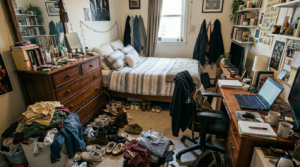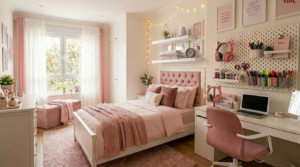
Shoes are one of the most stubborn storage problems in a small bedroom. They collect near the door, end up beside the bed, disappear under chairs, and slowly take over floor space the room cannot afford to lose. Even a tidy bedroom can start to feel cramped once shoes no longer have a defined place to go.
The problem usually is not the number of shoes alone. It is the way they are being stored. Most traditional shoe storage solutions rely heavily on floor space, which is already limited in a small bedroom.
A better approach is to use vertical surfaces, hidden storage zones, and furniture that already exists in the room rather than adding bulky standalone racks everywhere.
This guide covers the most effective ways to store shoes in a small bedroom without making the room feel cluttered or overcrowded.
Why the Floor Is the Wrong Place for Shoes
Shoes scattered across the floor make a room feel visually busy almost immediately. The eye keeps stopping on different objects instead of reading the floor as one continuous open surface, which makes the entire bedroom feel tighter and less organized.
Even a standard floor shoe rack is not always ideal in compact bedrooms. While it consolidates the shoes into one place, it still occupies valuable floor width. In a room where circulation space already feels limited, that footprint matters.
The most effective shoe storage systems in small bedrooms usually move footwear upward, inward, or out of site entirely.
Use Wall Space Instead of Floor Space
The wall is the most underused shoe storage surface in a small bedroom. Using them for shoe storage frees up floor space and makes the room easier to move through visually and physically.
Angled wall-mounted shoe shelves
Slim wall-mounted shoe shelves hold footwear at a slight tilt so the pairs stay visible without needing deep shelving. They work particularly well beside the door, bedside the wardrobe, or along narrow sections of walls that are too small for furniture.
Even though the shelves are shallow, they store a surprising collection of pairs without making the room feel crowded.
They work best for everyday shoes that are accessed regularly.
Floating shelves used for shoes
Standard floating shelves work just as well for shoes as they do for books or storage boxes. In a small bedroom they can be positioned wherever the wall has space: above the door, along the lower section of a wall that’s too narrow for furniture, or beside the wardrobe at floor level.
A row of floating shelves stacked at different heights handles both flat shoes and taller boots without the shelves needing to be deep, since most footwear sits comfortably on a shelf that’s 25 to 30cm deep.
Pegboard with shoe hooks
A pegboard fitted with J-hooks sized for lightweight footwear such as trainers, sandals and flat shoes. Combined with the pegboard’s other uses for accessories and small items, it becomes a versatile wall zone that handles multiple storage categories without adding any floor furniture.
If you’re already using a pegboard above the desk or dressing area, extending it or adding a second section specifically for shoes is inexpensive and helps the room feel visually connected.
Use Behind the Door for Storage
The back of the bedroom door is one of the most consistently overlooked storage surfaces in a small room. It holds a useful amount of footwear without affecting the room layout and it costs very little to set up.
Over-door pocket organizers
A clear-pocket over-door organizer designed for shoes holds a pair per pocket and keeps every pair visible without searching.
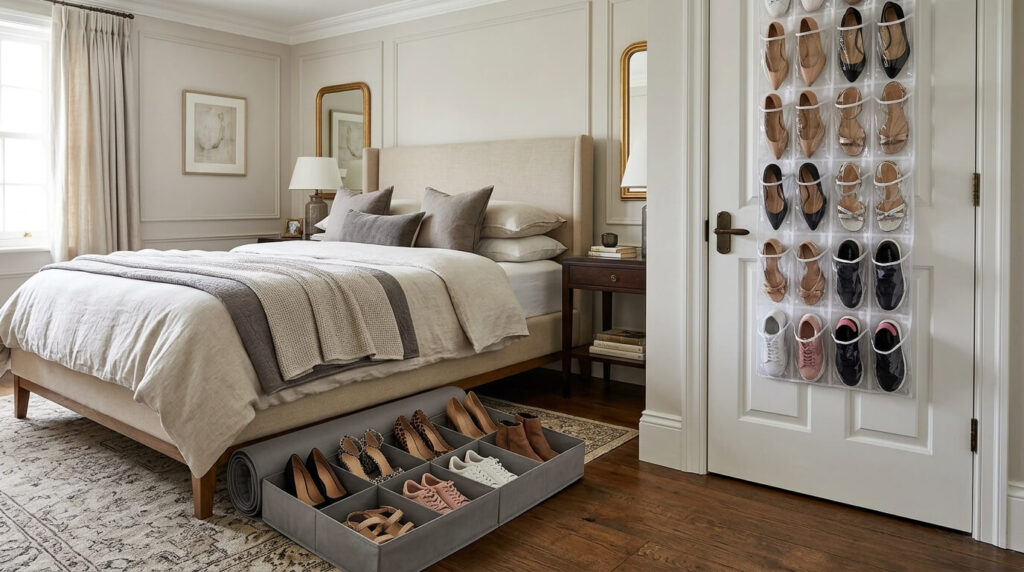
For a bedroom with a modest shoe collection, a single over-door organiser handles the full rotation of regularly worn footwear in a space that previously did nothing.
Clear pockets are worth prioritizing over opaque fabric ones since finding a specific pair without pulling everything out is significantly faster.
Over-door shoe racks
An over-door shoe rack with tiered shelves rather than pockets holds more pairs per door and suits bulkier shoes like trainers and boots that don’t fit comfortably into pocket organizers.
Check the door clearance before buying, since a tiered rack adds more depth behind the door than a pocket organizer and needs enough room to clear the door frame when the door closes.
Use Storage Zones You Already Have to Store Shoes in a Small Bedroom
Before adding any new storage pieces, check whether the furniture already in the room has unused capacity for shoes.
Store shoes inside the wardrobe base
The floor section of a wardrobe is often either empty or used inefficiently, with shoes piled loosely rather than properly organized.
A low angled shoe shelf or a slim shoe rack fitted inside the wardrobe base immediately increases how many pairs the space can hold while making everything easier to access.
Keeping everyday shoes at the front and less-worn pairs toward the back gives a practical daily system that stays manageable long term.
Use under-bed storage for seasonal shoes
Under-bed storage works best for shoes that are not needed every day. Flat under-bed boxes, particularly the kind with individual compartments keep pairs separated and dust-free.
For more ideas on making the most of the under-bed zone, the guide to best under-bed storage for small bedrooms covers the most space-efficient options in more detail.
Store overflow shoes inside an ottoman
An ottoman at the foot of the bed that opens for storage is useful for bulky or less frequently worn shoes that do not need to stay visible every day
Because the storage is concealed, it keeps the room looking tidier than open racks or loose baskets.
Ottomans also work well in a small bedroom because they combine seating, surface space and storage in a single footprint.
Slim Shoe Cabinets Work Better Than Bulky Racks
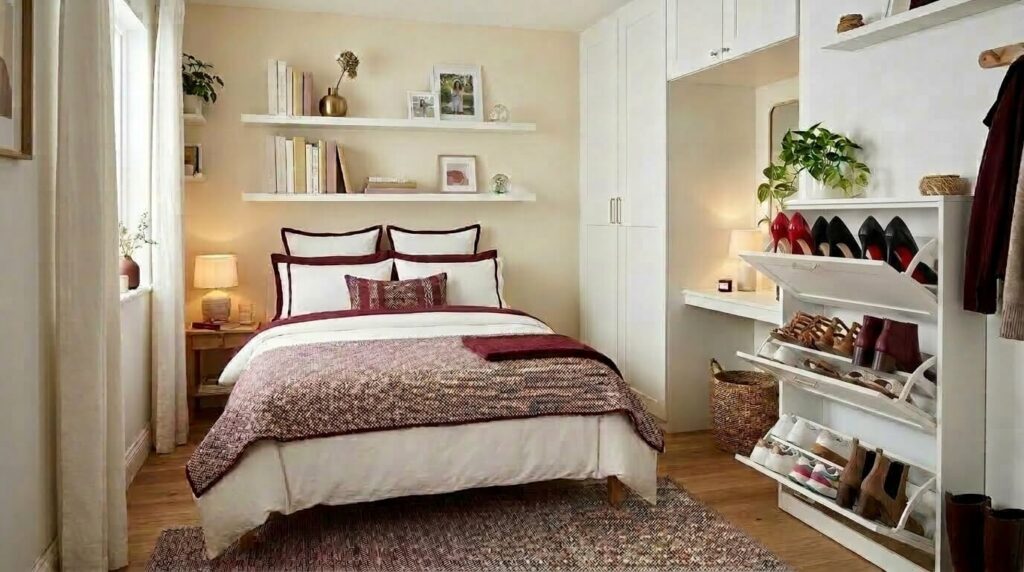
One of the most overlooked options for small bedrooms is a slim flip-down shoe cabinet. These cabinets project much less into the room than traditional racks while holding a surprisingly large number of pairs.
Because shoes are hidden behind closed fronts, the room feels visually calmer and less crowded. This makes them especially useful in minimalist bedrooms or in rooms that already contain open shelving and visible storage elsewhere.
A narrow cabinet beside the door or wardrobe often works better than a large open rack sitting directly on the floor.
Open Storage vs Hidden Storage for Shoes
The best storage solution depends partly on whether you prefer shoes visible or concealed and how many pairs need storing. A small collection of six to ten everyday pairs is manageable with wall-mounted shelves or an over-door organizer alone.
However, many small bedrooms work best with a combination of both, accessible open storage for daily shoes and hidden storage for overflow or seasonal pairs.
A larger collection needs a combination of solutions: the current rotation on the wall or behind the door, less-worn pairs inside the wardrobe base, and seasonal footwear in under-bed storage or in another room entirely if that’s available.
Trying to store a large shoe collection entirely in a small bedroom using only one type of storage almost always produces a result that looks overcrowded and is hard to maintain. Splitting the collection between accessible and longer-term storage, and keeping only what’s currently in rotation visible and within easy reach, is the best approach that keeps the bedroom organized.
Open storage
- Easier to access
- Best for everyday footwear
- Lighter visually for a small organized collection
Hidden Storage
- Visual clutter is lower, behind closed doors
- Requires less maintenance
- Best if the room is already busy
Seasonal Rotation Frees Up More Space Than Any Rack
No storage solution works well under the pressure of a collection that’s larger than the room can reasonably hold. Editing down to what’s actually worn regularly and storing the rest is more effective than buying progressively larger storage for a collection that keeps growing
Winter boots, heavy-soled shoes and summer sandals that aren’t being worn take up considerable space in a small bedroom and don’t need to be there.
Moving out-of-season footwear into vacuum bags under the bed, or into a flat storage box at the top of the wardrobe frees up the accessible shoe storage for what’s actually being worn right now.
Done twice a year at the season change, this single habit reduces the active shoe storage requirement significantly and keeps the bedroom storage feeling manageable rather than perpetually full.
The Mistakes That Make Shoe Storage Worse
- Buying a large floor-standing shoe that dominates the room, makes it smaller and narrows the walkway.
- Spreading shoes across multiple random locations instead of creating one defined zone.
- Mismatched storage boxes and loose piles contribute to visual clutter.
If the entire room is starting to feel overwhelmed rather than just the shoe storage, the post on how to hide clutter in a small bedroom is a useful place to start before reorganizing everything fully.
The Goal Is Not More Storage, it is Better Storage
The strongest shoe storage systems in small bedrooms are not necessarily the ones that hold the most pairs. They are the ones that keep the floor clear, make everyday shoes easy to access, and stop foot wear from visually taking over the room.
Start with the storage zones the bedroom already has available: the walls, the back of the door, the wardrobe base, and space under the bed. Once the shoes have a proper designated home, your small bedroom will feel noticeably calmer, cleaner, more spacious and easier to maintain.