Small Bedroom Storage Ideas for Tight Spaces
The problem with a tight bedroom isn’t usually a lack of storage options. More often, it’s that the storage is scattered, unplanned, or taking up more floor space than the room can afford. A basket gets bought for one problem, a shelf for another, then a drawer unit for something else entirely. Before long, the room contains more storage than before, yet somehow feels more cluttered.
What works better is stepping back and treating the room as a set of distinct storage zones, each with a clear purpose. When every part of the room earns its place, storage stops feeling like an obstacle and starts feeling built in.
This guide goes through the best small bedroom storage ideas for tight spaces, working through the room from the floor to the ceiling, so you can improve what you already have before buying anything unnecessary.
Think in Zones, Not Random Storage Pieces
Most people organize a small bedroom reactively. Something has nowhere to go, so another organizer gets added to solve that one problem.
The result is a room full of mismatched solutions that collectively use more space than a considered whole-room approach would.
A smarter method is to divide the room into practical zones:
- Under the bed
- The walls
- Behind the door
- Inside existing furniture
- Above furniture
- Furniture with built-in storage.
Almost every tight bedroom has untapped capacity in at least three of these areas. Working through them in order, rather than reaching for the nearest product, creates a room that stores things efficiently instead of one that simply contains more storage containers and furniture.
Use the Space Under the Bed First
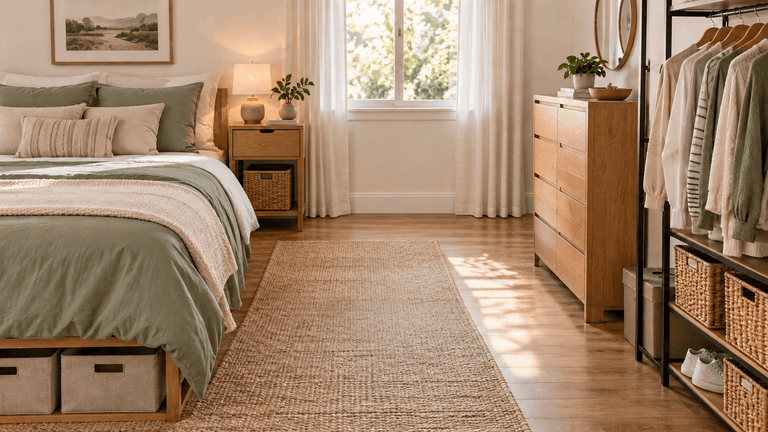
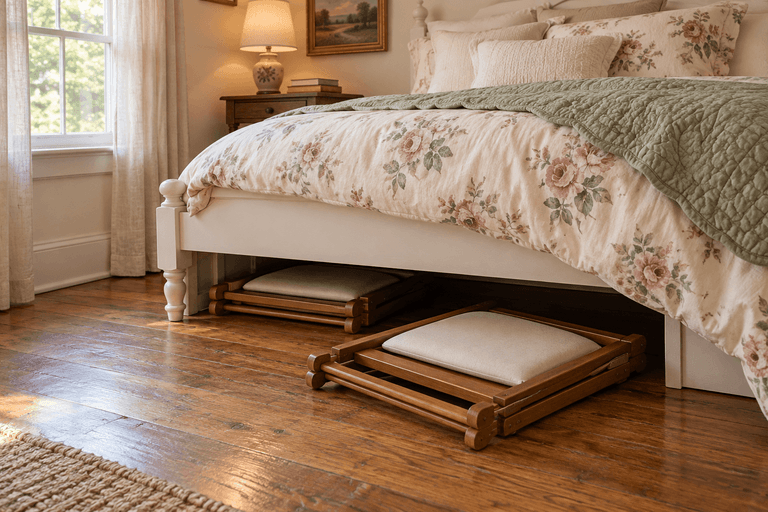
The space under the bed is the single most valuable storage zone in a tight bedroom, and it’s the most consistently underused. In a room where floor space is scarce, it makes no sense to leave several square feet of it doing nothing.
Flat storage boxes on castors are the most flexible option, rolling out easily and sliding back without disturbing the bed. For bulkier items like spare bedding and out-of-season clothing, vacuum compression bags reduce the volume significantly before storing.
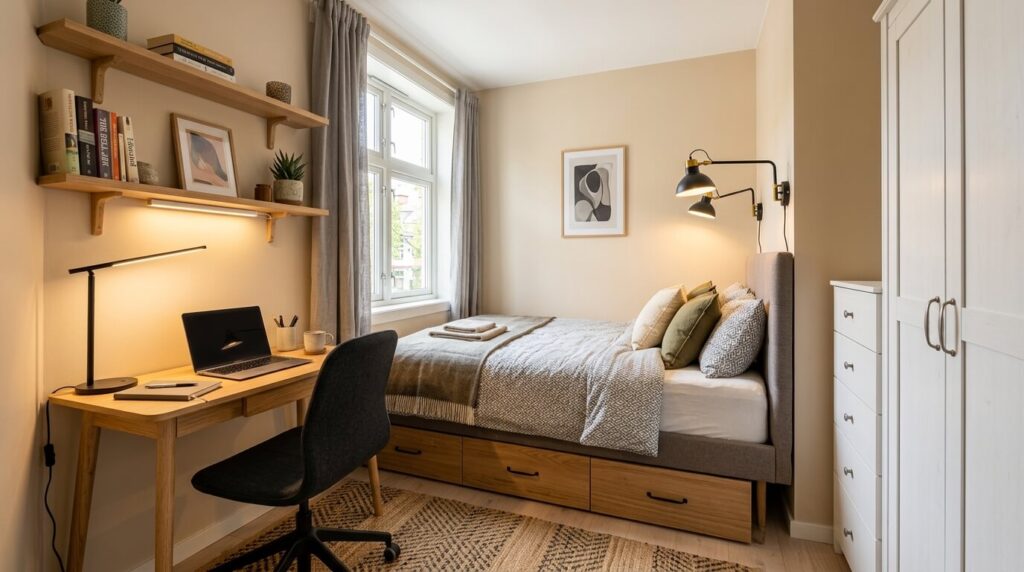
The most efficient setup of all is a bed frame with built-in drawers, which removes the need to manage separate containers entirely and keeps everything contained and accessible.
The one thing to check before buying anything is the clearance height between the floor and the underside of the bed frame. Standard under-bed storage is designed for around 30cm of clearance. Lower frames need low-profile options specifically, and it’s worth measuring before ordering.
The full guide to under-bed storage for small bedrooms covers clearance heights, box types and what actually fits, and is worth reading if this is your main storage gap.
Use the Walls Instead of the Floor
Walls are the most overlooked storage surface in a small bedroom, partly because using them well requires a bit more thought than pushing a piece of furniture against them. But wall-mounted storage keeps the floor clear, which is one of the strongest ways to make a tight room feel calmer and more open.
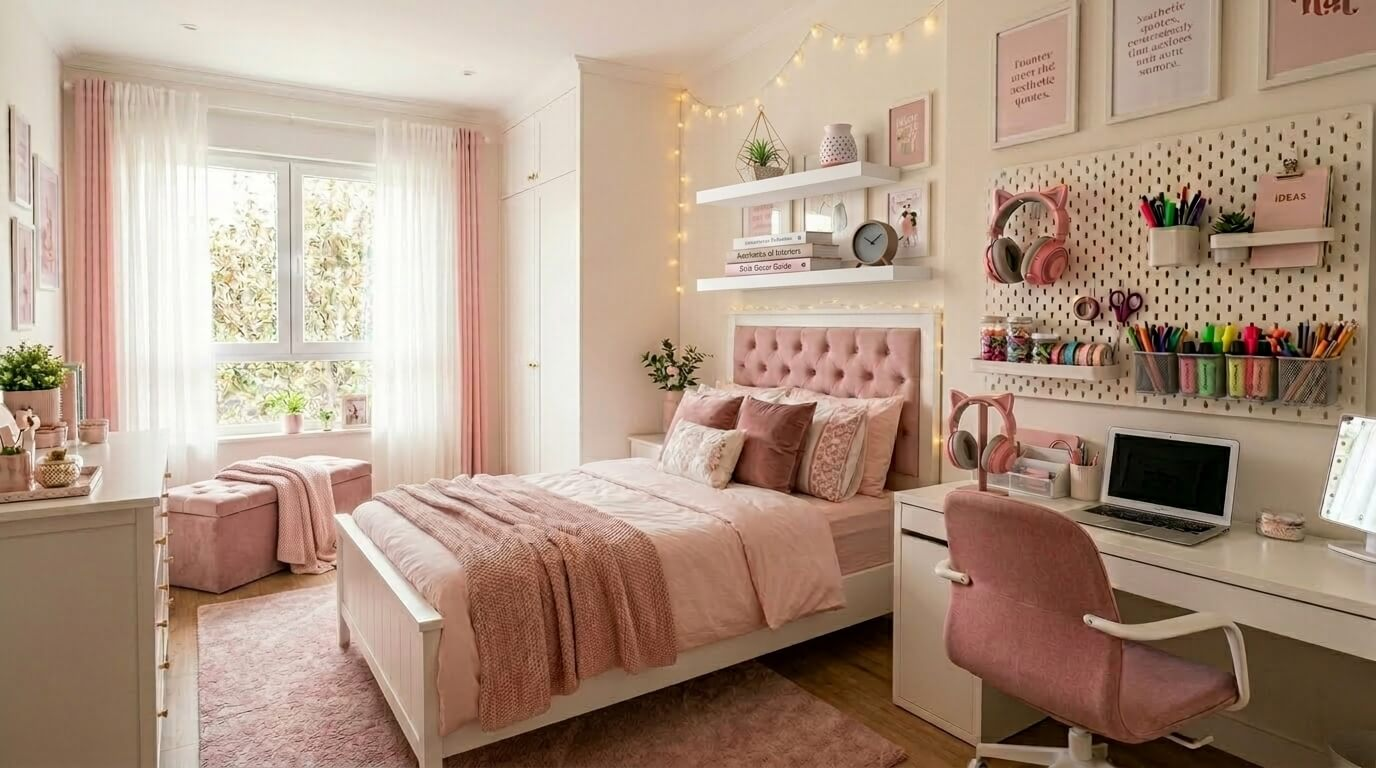
Floating shelves
A run of floating shelves above the bed, beside the wardrobe, or along an otherwise empty wall handles books, folded clothing, baskets, everyday essentials, and decor without using a single inch of floor space.
The key in a small room is keeping what goes on them edited. A shelf packed with too many small objects reads as clutter. A shelf with a few intentional items and some breathing room reads as storage that’s working.
Wall-mounted rails and hooks
A wall-mounted rail handles hanging clothing without the bulk and floor footprint of a freestanding wardrobe.
In a room without a closet particularly, a rail fixed at the right height with matching hangers does the same job as a hanging section of a wardrobe at a fraction of the visual weight.
Hooks at the side of the room or near the door handle bags, scarves, belts and daily-use items that would otherwise end up on the floor or draped over furniture.
Pegboards
A pegboard on the wall above a desk or dressing area is one of the more versatile wall storage tools available. Hooks, shelves and holders can be rearranged as needs change, and the whole setup stays off the desk surface and off the floor.
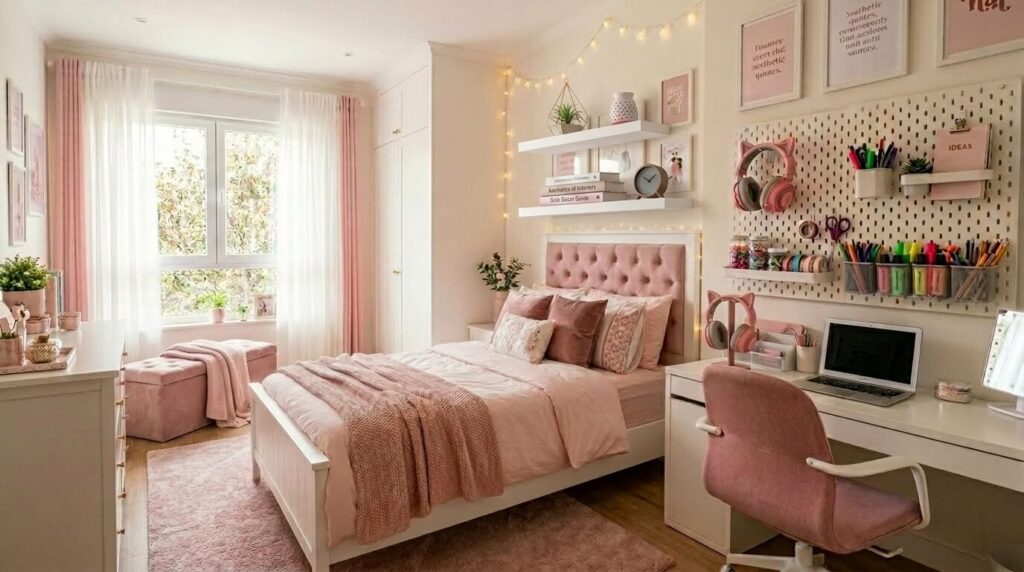
Particularly useful for anyone who uses the bedroom as a workspace and needs small items and supplies close at hand.
Use the Back of the Door
The back of the bedroom door is often wasted space, yet it can hold a surprising amount without affecting the room layout.
An over-door organizer with pockets handles shoes, accessories. A row of over-door hooks takes bags, towels, robes and frequently worn outer layers while slim hanging baskets handles toiletries and folded items.
Over-the-door jewelry cabinets (or mirrored armoires) are also one of the most space-efficient ways to deal with small-item clutter in tight bedrooms. Perfect for jewelry, skincare and beaty products, watches, hair accessories and other small items, they are particularly effective in compact spaces because they reduce visual noise, by keeping items hidden behind a closed door, items that would otherwise clutter surfaces in a tight bedroom. Furthermore, many versions also include a full-length mirror, combining storage and functionality without taking up floor space.
The one consideration is door clearance. Make sure the organizer or hooks don’t prevent the door from closing fully or catching on the door frame. Most over-door products account for standard door thicknesses, but it’s worth checking the depth before buying.
This is one of the easiest space saving storage ideas for tiny bedrooms because it uses space you already have.
Use the storage Hidden Inside the Existing Furniture
The furniture already in the room almost certainly has unused capacity, either inside it or above it.
Improve Drawers
A drawer without dividers is a drawer where categories blur together and items get buried.
Use adjustable dividers to create fixed sections that maintain their organization even under daily use.
Folding clothes vertically rather than stacking them horizontally means more fits in the same drawer and everything stays visible without pulling things out.
Use the space above furniture
The top of a wardrobe or shelving unit is ideal for storing items that are needed occasionally rather than daily: spare bedding, luggage, seasonal clothing or archived paperwork.
The items stay out of the main sightline and matching labelled containers keep it looking deliberate rather than like overflow.
Small changes inside existing furniture often reveal storage capacity that was already there but wasn’t being used. The post on how to organize a small bedroom without a closet goes through the full drawer and shelf system in more detail.
Choose Furniture That Stores Things Too
In a tight bedroom, single-purpose furniture is often inefficient. Pieces that combine their primary function while adding storage make better use of limited floor space than single-purpose alternatives.
Beds with built-in storage
A storage bed, whether through under-frame drawers or a hydraulic lift base, can remove the need for extra furniture entirely.
The storage capacity is significant and completely hidden, which keeps the room looking uncluttered. Worth prioritising when the budget allows for a bed frame replacement.
Ottomans and storage benches
An ottoman at the foot of the bed serves as a seat, a storage container or a landing spot for clothing or bags in one footprint.
Only use if the room has enough clearance between the bed and the facing wall for comfortable movement.
Smarter Bedside Tables
A bedside table with drawers will usually outperform an open shelf unit because it hides clutter and uses the footprint better.
Keeping the Floor as Clean as Possible
Visible floor space strongly affects how large a room feels. Even if the room dimensions stay the same, a clearer floor creates a calmer visual impression.
This means storage should move upward unto walls, inward in drawers, under the bed and inside multi-purpose furniture. Not outward into walkways.
And when considering any piece of furniture in a small bedroom, it’s worth asking whether a version with built-in storage exists at a similar price point before defaulting to the standard option.
The Habit That Keeps It Together
Even the best storage system in a small bedroom degrades faster than in a larger room because there’s less margin for disorder.
One bag left on the floor, a few clothes out of place, and a cluttered bedside surface can make the whole room feel chaotic.
The system itself isn’t the problem. The habit of maintaining it is what determines whether it keeps working.
A five-minute reset at the end of each day makes a real difference in keeping a tight bedroom feeling manageable rather than overwhelming:
- Return everything to its designated zone
- Clear surfaces
- Put clothes away
- Reset the bed area
If you’re already dealing with a room that’s already tipped into chaos rather than simply needing better organization, the post on how to hide clutter in a small bedroom covers the fastest ways to get the room back under control before working on a longer-term system.
Start With One Zone, Not the Whole Room
Trying to overhaul everything at once usually leads to frustration and half-finished projects.
The most practical way to approach storage in a tight space is to pick the zone with the most obvious gap and start there. For most small bedrooms that’s the space under the bed or the walls, since both offer significant capacity without touching the floor plan.
Final Thoughts
The best small bedroom storage ideas for tight spaces are rarely about squeezing in more furniture. They are about using overlooked space intelligently.
Use the bed, the walls, door and multi-purpose furniture while ensuring the floor remains as open as possible.
A tight bedroom can function far better than it looks on paper when everything is doing its job.