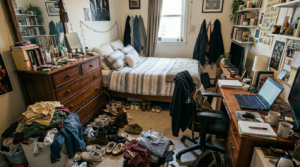
A standard dresser is often treated as essential bedroom furniture, but in a small bedroom, it can create almost as many problems as it solves. Most dressers are wide, bulky, and positioned against the very walls a tight room needs to keep visually open. While they store folded clothes well, they also consume valuable floor space and make narrow bedrooms feel heavier and more crowded than they need to.
The good news is that storing clothes in a small bedroom without a dresser is usually easier than people expect. The key is replacing horizontal storage with solutions that use vertical space, hidden storage, or existing furniture more efficiently.
Whether you’re working with a tiny bedroom, a rented room, or a studio-style setup where the sleeping area shares space with the rest of the home, the alternatives below work better than a traditional dresser ever did.
Why Dressers Often Feel Too Large in Small Bedrooms
The problem with a standard dresser in a small bedroom isn’t the storage it provides. It’s the floor space it requires and the wall space it consumes at exactly the wrong height.
A typical six-drawer dresser is wide, fairly deep and visually heavy at eye level. That combination matters. In a small room, a large, dresser along a long wall interrupts the sightline across the room. It also narrows the visible floor area, and limits what else that wall can be used for.
The depth is the other issue. Many dressers project nearly half a metre into the room, which can noticeably tighten walkways around the bed. In very narrow rooms, that lost circulation space is felt immediately.
Replacing a dresser with storage that goes upward, underneath existing furniture, or directly onto the wall usually frees the room considerably without reducing storage capacity.
Use a Tall Narrow Chest of Drawers Instead of a Wide Dresser
If drawer storage is still the best fit for the room, a tall narrow chest is usually a far better option than a traditional wide dresser.
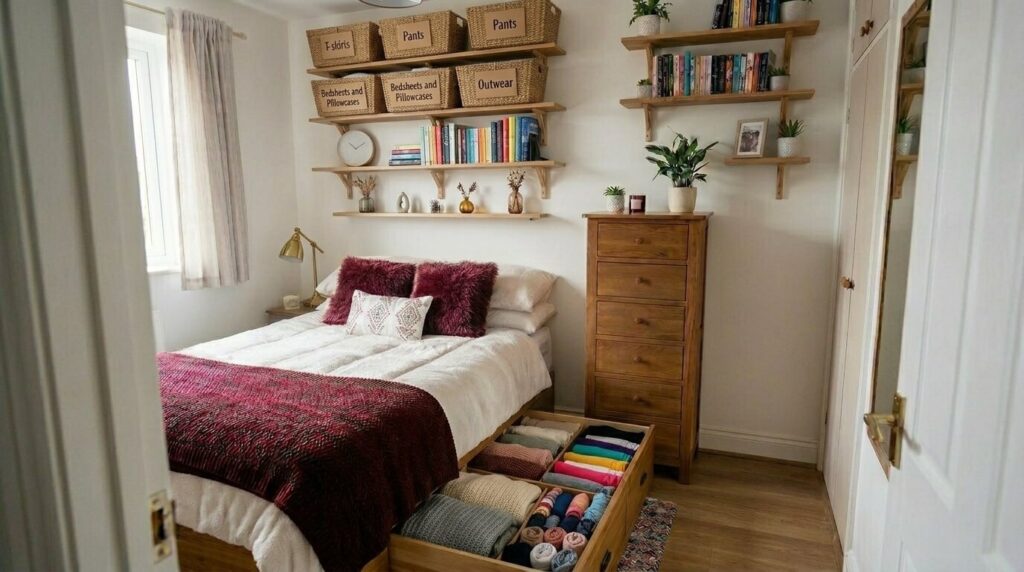
The storage comes from height rather than width, which preserves more floor space and leaves longer walls visually lighter. A tall chest also fits more comfortably into awkward sections of a room, including corners, alcoves, or the short wall at the foot of the bed.
In smaller rooms especially, vertical furniture tends to feel less overwhelming because it concentrates storage into a tighter footprint rather than spreading it horizontally across the room.
When choosing one, pat attention to drawer depth. Drawers that are 40 to 45cm deep hold folded clothing far more practically than shallower drawers that barely hold anything substantial.
Combine Hanging and Drawer Storage into One Zone
One reason rooms feel cluttered is because clothing storage gets scattered across multiple furniture pieces. Hanging clothes live in one area, folded items in another, and accessories somewhere else entirely.
Combining those functions into a single clothing zone makes the room feel calmer and easier to maintain.
Many wardrobes now include integrated drawers beneath the hanging section, or allow modular drawer units to slot beside hanging rails within the same footprint. That setup often replaces both wardrobe and dresser at once while using less overall space.
This approach works particularly well in rooms where keeping storage visually contained matters. Instead of furniture spread across several walls, the clothing storage stays consolidated into one defined area of the room.
If you’re still deciding between wardrobes, rails and open storage systems, the post on small bedroom storage ideas for clothes with no wardrobe goes deeper into the different options, and when each one works best.
Use Under-Bed Storage as Your Main Folded Clothing Area
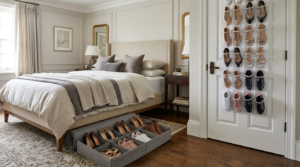
In many small bedrooms without dressers, the most efficient place for folded clothing is under the bed.
A storage bed with built-in drawers can often replace a dresser entirely because it uses the floor space the bed already occupies rather than requiring any additional footprint. The drawers handle folded clothing, seasonal items, spare bedding and the miscellaneous things that would otherwise live in a dresser, all completely hidden but accessible.
Even standard bed frames can work well with low-profile storage boxes underneath.
This setup works especially well where wall space is limited or another furniture piece would crowd the room.
The one practical consideration is drawer depth or bed clearance. Under-bed drawers in most frames are shallower than wardrobe drawers, which suits t-shirts, jeans, knitwear and folded items well but is less suited to bulky pieces.
For a full breakdown of under-bed systems, box types, and clearance measurements, the guide to the best under-bed storage systems for small bedrooms covers the under-bed zone in more details.
Take Storage Off the Floor Completely
Taking the folded clothing storage off the floor entirely is the most space-efficient approach available, and wall-mounted options make that possible without requiring a wardrobe reconfiguration or a new bed frame.
Floating drawer units
A wall-mounted floating drawer unit provides concealed storage without occupying floor space underneath. That open area makes the room feel noticeably less cramped, especially in narrow bedrooms. Floating units at the right height can double as a bedside surface in rooms where the bed sits nearby.
Deep shelves with baskets or bins
A run of deep floating shelves with labelled baskets or bins for each clothing category functions as open drawer storage. Each basket holds a category, t-shirts in one, knitwear in another, jeans in a third, and the labelling means the system stays easy to maintain.
The important partis editing what stays visible. Open storage only works well when categories stay reasonably contained and surfaces aren’t overcrowded.
Use Cube Storage More Strategically
Cube storage units work best when they are treated as flexible systems rather than generic shelving.
Cubes fitted with fabric drawer inserts can hold folded clothing in the same way a dresser drawer would, while open cubes handle baskets, shoes, or frequently used items.
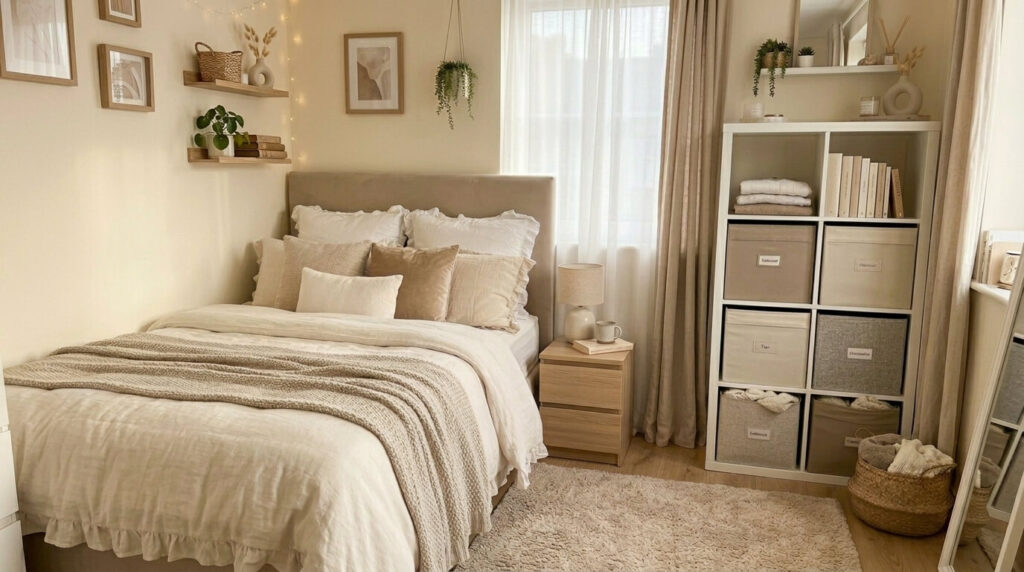
Because the layout is modular, the storage can adapt as the room needs change rather than locking everything into one fixed format.
In a small bedroom a cube unit positioned in a corner or at the end of a clothing rail uses space that a standard dresser couldn’t occupy.
Assign Every Clothing Category a Home
Replacing a dresser works only works long term if when every category of clothing has a clear replacement home assigned before the dresser leaves the room.
Without that step, clothes simply migrate into piles around the room.
Folded basics
Folded t-shirts, basics and lightweight tops do well vertically folded in under-bed drawers, cube inserts, or deep shelf baskets.
These are the highest-volume category in most wardrobes and the one that benefits most from a dedicated drawer or basket rather than being mixed with other items.
Knitwear and bulkier items
Knitwear and heavier folded pieces need more drawer depth than lighter items. A tall narrow chest handles these best because the drawer depth is closer to a standard dresser. Under-bed drawers work if the clearance is generous.
Underwear and socks
Underwear and socks do well in a dedicated drawer with dividers, a small basket on a shelf, or a fabric insert in a cube unit. The volume is modest enough that almost any of the alternatives above can accommodate this category alongside larger items.
Accessories and miscellaneous items
A small tray or a box on a shelf handle miscellaneous drawer items, phone chargers, small accessories, things without a clear category. Keeping these contained to one spot stops them from drifting onto other surfaces.
The post on how to organize a bedroom with too much stuff goes deeper into assigning categories properly and creating systems that actually stay manageable day to day.
The Best Storage Setup Depends on the Room
No single dresser replacement works for every bedroom. Some rooms benefit more from a tall chest, a storage bed, floating drawers, wardrobes with integrated storage, wall shelving, or cube systems.
The right choice depends on:
- How much clothing needs storing
- How much space is available
- Whether the room is narrow or square
- How much visible storage you’re comfortable with
But in most small bedrooms, replacing a bulky dresser with storage that uses height, hidden space, or existing furniture more intelligently makes the room feel significantly easier to leave in.
The dresser itself is optional. The storage isn’t.