Disclosure
This post may contain affiliate links. If you purchase through these links, I may earn a small commission at no extra cost to you. As an Amazon Associate I earn from qualifying purchases.
Some desks drain your energy the moment you sit down. The surface is covered in things that don’t have homes. The lighting is harsh or flat. The chair is uncomfortable. Everything around you is either dull, cluttered or just there, with no real purpose. Getting any real work done in a space like that takes more effort than it should.
Other workspaces have the opposite effect. You sit down. It feels good to be in and you feel ready to start. The difference is almost never about how much the setup cost. It’s about designing a space where color, light, comfort, storage and texture all working together instead of competing with one another.
Whether your workspace is a dedicated home office or tucked into a corner of a small bedroom, you can create a setup that’s both beautiful and practical. Here is how.
Why Your Workspace Matters
Your workspace affects far more than just aesthetics.
A well-designed space has a direct effect on your focus, encourages you to keep things organized and simply feels better to spend time in.
Color plays a surprisingly important role too. Soft, warm colors like sage green, terracotta, warm yellow and dusty rose create a calm, creative energy that suits deep work and creative tasks. Cooler colors like blue and teal encourage focus and concentration.
The goal with a colorful workspace isn’t to paint everything the most saturated version of your favorite color. It’s to use color where it creates the mood you’re going for and let the rest of the space breathe around it.
Just as important is keeping visual clutter under control. A beautifully colored desk that’s covered in loose papers, tangled cables and miscellaneous items will still feel chaotic regardless of the palette.
The goal isn’t simply adding color, it’s creating a workspace where everything has a place.
Start With a Desk That Actually Fits Your Space
Everything else in a workspace is built around the desk, so choosing the right one makes every decision afterwards easier.
Desk with built-in drawers
If you’re buying a new desk from scratch, choosing one with drawers is one of the most impactful decisions you can make.
It can remove the need for a separate filing cabinet or storage unit beside the desk, which frees up floor space and reduces the visual clutter of the setup lower.
Just as importantly, think about how the desk will look every day. It’s usually the largest piece of furniture in the workspace, so its design has a huge influence on the overall feel of the room.
We will be covering the best small desks with storage in dedicated buying guide soon.
Open desks
A simple open desk with no drawers offers maximum flexibility.
It works in almost any space and pairs naturally with external storage solutions like rolling carts, pegboards and floating shelves, allowing you to customize your storage needs. Open desks also tend to create a lighter visual appearance which works especially well in small bedrooms.
Corner desks
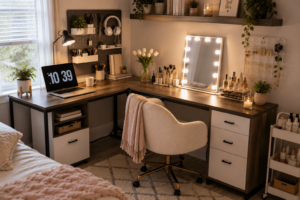
Corners are usually the most underused part of a room. A corner desk turns that forgotten space into an efficient work station while leaving the rest of the walls available for storage, art and shelving.
Compact and standing desks
A compact desk with enough surface to work comfortably is the right call when the workspace has to fit into a genuinely small area.
A standing desk or a sit-stand converter is worth considering if you spend long hours at the desk, since the option to alternate between sitting and standing has real benefits for focus and physical comfort throughout the day.
Choose a Chair You’ll Actually Enjoy Sitting In
The chair is easily one of the most important purchases in any workspace, yet it’s often treated as an afterthought.
A beautiful desk won’t matter much if you’re uncomfortable after thirty minutes.
Look for a chair that supports your posture while fitting comfortably within your available space. Oversized executive chairs can quickly overwhelm a small bedroom, whereas a streamlined ergonomic chair often provides a better balance between comfort and scale.
Don’t overlook the chair as part of your overall design either. It needs to contribute to the aesthetic rather than fighting it. A workspace you’ve put real effort into styling looks noticeably better when the chair matches the palette rather than being a random gray or black piece that was chosen purely on function. That doesn’t mean the chair has to be colorful. It just means it should be chosen alongside the rest of the setup rather than in isolation from it.
We’ll be covering specific recommendations in an upcoming guide on the best desk chairs for small bedrooms.
Add Color Without Overwhelming the Room
This is where most people go wrong by doing too much at once.
The goal isn’t to make every surface a different color. It’s to introduce color strategically so the workspace feels lively and personal without feeling chaotic.
The most effective approach is to choose one or two focal colors and bring them in through the smaller, more changeable elements of the setup rather than through the desk or the walls.
A colorful desk mat, coordinated organizers, artwork, planters and a few decorative accessories create personality without overwhelming the space. Because these pieces are inexpensive and easy to replace, they’re also perfect if you enjoy refreshing your workspace every few minutes.
The desk mat in particular is worth investing in. Besides protecting the desktop, it’s often the largest visible accessory in the workspace, making it one of the easiest ways to establish your overall color palette.
Mix Different Textures
Color catches your attention, but texture is what makes a workspace feel warm and inviting.
The most interesting desks combine smooth surfaces with natural materials. Think wooden shelves paired with ceramic planters, a linen desk mat beside a metal lamp, a woven basket underneath the desk or a cork board
Mixing textures creates depth without adding clutter. Even a simple workspace feels richer when different materials work together instead of everything having the same glossy finish.
Layer Different Heights for Visual Balance
The most attractive workspaces aren’t flat. Instead, they guide your eye naturally from one level to another.
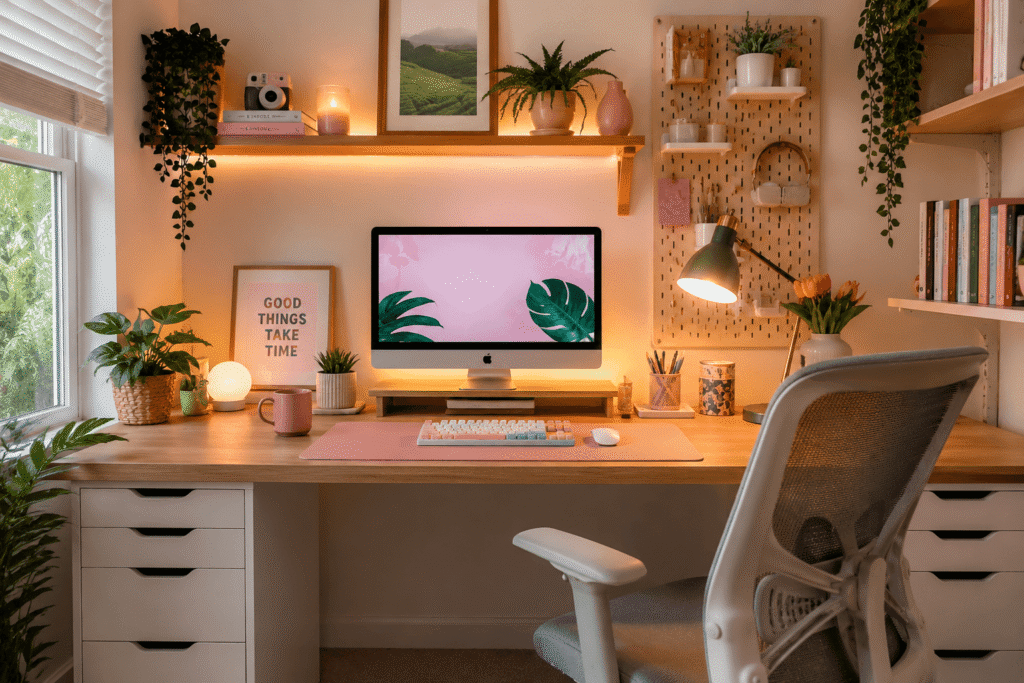
Place the monitor or laptop on a stand or riser at the back center of the desk. Position a desk lamp or a small plant beside it. Keep shorter accessories like notebooks and stationery closer to the front. Then extend the design upwards using floating shelves or a pegboard.
This height layering creates depth which makes even a compact workspace feel more thoughtfully designed.
Make Lighting Part of the Design, Not an Afterthought
Lighting is one of those workspace elements that’s usually chosen last, treated as purely functional yet it has one of biggest impacts on how a small workspace looks and feels.
Whenever possible, position the desk so natural light comes from the side rather than directly behind or in front of the screen. Side lighting reduces glare while keeping the workspace bright throughout the day.
If natural light is limited, a good desk lamp becomes essential. Choose one with an adjustable color brightness or temperature so you can switch between brighter light for focused work and warmer light when reading or winding down for the evening.
Warm LED strip lights behind the monitor or along the underside of floating shelves above the desk add ambient light that reduces eye strain and gives the whole workspace a softer, more inviting glow than overhead lighting alone.
Choose Storage That Looks as Good as It Works
There’s a practical truth about tidy workspaces that almost nobody talks about: the reason many organized workspaces stop being organized within a week or two is that putting things away requires too much effort or the places they go are too out of sight to feel worth using. Beautiful storage solves this in a way that purely functional storage doesn’t.
When the pen holder is a terracotta ceramic cup that you actually like looking at, putting pens back in it is pleasant rather than neutral. When the paper tray is a pretty acrylic organizer in a color that fits the palette, filing something away feels like contributing to the aesthetic rather than doing a chore. This sounds small, but it has a real and consistent effect on how long a workspace stays organized.
The practical implication is that it’s worth spending slightly more on organizers that you actually find attractive rather than defaulting to the cheapest functional option. A workspace covered in mismatched plastic organizers will never quite feel like the space you wanted it to be, even if it’s technically organized. The organizers are part of the design.
If you’re looking to get functional storage, this post on 7 space-saving products that fixed my small desk setup gets into some of the best purchases, that are well worth the money when it comes to desk storage and organization.
Bring Life into the Space
Plants are the single most underrated workspace addition available. A small pothos or snake plant beside the monitor or on the shelf above the desk instantly softens the desk setup while adding texture and color.
If natural light is limited or the schedule makes regular watering genuinely difficult, a high-quality faux plant achieves the same visual result with no maintenance.
Oh, fresh flowers deserve a mention too. Even a small bunch of flowers in a simple ceramic vase can brighten the room and make the workspace feel more welcoming throughout the week
Beyond plants, the personal elements of a workspace deserve real consideration. A framed photo of someone you love, a meaningful quote that inspires you, a piece of art that genuinely resonates with you, a book from a person who changed the way you think, a small object that has meaning: these things make a workspace feel like yours rather than like a workspace you happen to be using. A space that feels personally connected to you is easier to return to and easier to stay at.
Finish With the Small Details
The last layer of a colorful workspace is the details, and they matter more than they’re usually given credit for. A beautiful workspace photographed up close is almost always beautiful because of the small things.
A colorful keyboard, matching wireless mouse or mouse pad, textured notebooks or a ceramic coffee mug might seem like small additions on their own, but together they create a workspace that feels intentional rather than assembled.
Pay attention to the material and finishes you choose. Matte keyboards, linen desk mats, ceramic accessories and wooden organizers create a richer, warmer look than a collection of mismatched plastic items.
Scent can also change the atmosphere. A subtle candle or reed diffuser makes the space smell as good as it looks.
Common Mistakes to Avoid
Even beautifully decorated workspaces can lose their impact if a few common mistakes creep in.
Too many colors
Limit your palette to two or three colors with a neutral base so the room feels cohesive rather than chaotic.
No focal color
Every workspace benefits from one dominant color of feature that draws the eye. Pick one color to lead and let the others support it.
Buying organizers before choosing the desk
The organizers need to be sized for the desk you have, positioned in relation to the chair you choose and styled in a palette that fits the overall setup.
Ignoring the chair
An uncomfortable chair makes sitting at the desk feel like something to be endured rather than enjoyed. The chair is not a secondary decision.
Poor lighting
Layering natural light, task lighting and ambient lighting creates a much warmer workspace.
Ignoring cable management
Visible cables undermine the entire aesthetic of a carefully styled workspace. Cable management, whether through a cable box under the desk, adhesive clips along the back edge, or a cable management tray, is worth doing.
Forgetting texture and adding life
Mixing wood, fabric, ceramic, cork, metal and some lants of flowers creates depth without adding clutter.
Overcrowding the desktop.
Too much stuff on the surface cancels out every other design decision. A clear desk with well-chosen items is part of the design.
Frequently Asked Questions
How can I make my desk more colorful without spending much?
Start with accessories instead of furniture. A colorful desk mat, matching organizers, a small plant, artwork and a few accessories can completely transform a workspace without requiring a large budget.
How many colors should I use in a workspace?
Two to three colors work best for most workspaces. Pair them with neutral tones like white, cream or natural wood to keep the room feeling calm rather than busy.
Can a colorful workspace actually improve productivity?
Color alone won’t make you more productive. Research suggests that color does affect mood and cognitive state, but the relationship isn’t simply more color equals more productivity. The more important factor is that a workspace you actually enjoy being in encourages you to spend more time there and to treat it with more care, both of which tend to have a positive effect on output over time.
How do I decorate a small workspace without making it feel cluttered?
The key is vertical. Get as much as possible off the desk surface and onto shelves, pegboards, wall hooks and the area above the desk rather than spreading outward across the surface. Limit the desk surface to what’s actively being used, keep cables managed and choose a few well-considered pieces rather than filling every inch with objects.
Your Workspace Should Work for You
A colorful workspace isn’t about following trends or making a design statement. It’s about building an environment where you genuinely want to show up and do your best work.
The color creates warmth and personality. The lighting makes everything feel right. The plants bring life. The beautiful storage keeps things tidy in a way that purely functional storage doesn’t. And the small details make the space feel like yours rather than like a generic setup you inherited.
Start with the desk and the chair since those are the foundation. Add the lighting next. Bring in the color through the organizers, the desk mat and the accessories. Add a plant. Then finish with the small details that make the whole thing feel like yours.
If the workspace is inside a bedroom and the room itself still feels too small or too cluttered to build a proper desk setup into, the post small bedroom layout with desk and storage layout ideas covers how to create the space you need before layering in the aesthetic details.