Rectangular bedrooms often feel harder to arrange than square rooms. The room is longer than it is wide, which means one wall usually works better for the bed than the others. Put the bed in the wrong place, and the whole room can feel narrow, awkward, or like in a hallway.
The good news is that small rectangular bedrooms usually become much easier once the bed is positioned correctly. In most cases, the bed placement determines where the storage goes, how much walking space you have, and whether the room feels balanced or cramped.
This guide explains where to put a bed in a small rectangular bedroom, when the long wall works best, when the short wall makes sense, and how to arrange the rest of the room around it.
The Long Wall vs the Short Wall: Where Should the Bed Go?
The most common question in a small rectangular bedroom is whether the bed should go on the long wall or the short wall.
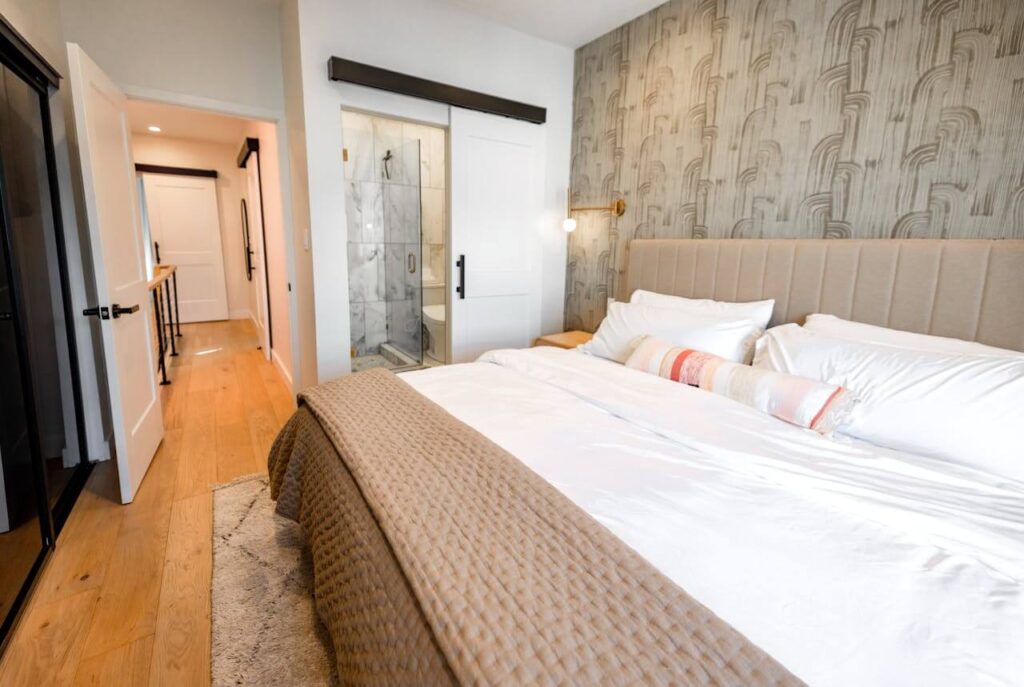
In many narrow rectangular rooms, placing the bed on the long wall is often the best option. It spreads the remaining floor space more evenly and prevents the room from feeling like a corridor with a bed pushed to one end.
When the bed is placed on the short wall, the remaining floor space often stretches in a long strip in front of the bed. This makes the room feel longer, narrower, and less balanced like a corridor with a mattress at the end of it.
However, there is no universal rule. The best wall depends on room width, door swing, windows, and how much clearance you can have around the bed.
Put the Bed on the Long Wall (Best for Narrow Rooms)
For many small rectangular bedroom layouts, the long wall creates the best flow.
Benefits of placing the bed on the long wall include:
- Better balance across the room
- More usable floor space in the front of the bed
- Easier placement for dressers or desks
- Less hallway effect
A centered bed on the long wall is the most common and usually the most visually satisfying arrangement. It gives the room a settled, deliberate look. This works particularly well when the long wall is clear of windows and doors, giving the headboard a clean, uninterrupted surface to sit against.
If the wall is long enough, this layout may also allow shifting the bed toward one end of the long wall, when you need a concentrated zone of floor space on one side, perhaps for a desk, a wardrobe, or a reading chair.
Rather than splitting the remaining space evenly on both sides of the bed, you give most of it to one purpose, which can actually make a small room feel more functional and intentional. The trade-off is that the arrangement looks less symmetrical, though good styling can compensate for that.
Tucking the bed into the corner at one end of the long wall, with the headboard on the long wall and one side of the bed against the short wall, is the most space-efficient option of the three. It consolidates the bed into a corner and frees up the remainder of the long wall and the floor space in front of it. This works best for solo sleepers, since the short wall side of the bed becomes inaccessible, but in the right room it opens up a surprising amount of usable space.
Put the Bed on the Short Wall (When It Makes Sense)
Although the long wall is often stronger, there are narrow rooms where the short wall genuinely is the only workable option. This can happen when:
- The room is very narrow, typically rooms that are less than nine feet wide, where placing the bed on the long wall would leave such tight clearance on either side that moving around the room becomes difficult.
- The long wall has multiple doors or windows.
- Closet access would be blocked.
In those cases, the short wall becomes necessary rather than simply convenient, and the focus shifts to how you style and furnish the length of the room rather than the placement itself. The key is to avoid bulky furniture that exaggerates the tunnel effect.
Where to Put a Bed if the Long Wall Has a Window
A window on the long wall doesn’t necessarily rule out that wall for the bed. Placing the bed under a window can work well in a small rectangular bedroom, especially when it frees the other walls for storage or circulation.
If the window is centered on the wall, placing the bed beneath it is a workable arrangement provided you make considerations about light and you handle the window treatment thoughtfully.
Curtains that hang wide and tall, framing the bed rather than just the window opening, make the arrangement look intentional. A headboard that sits below the sill keeps the window functional and adds a clean separation between the bed and the wall above it. A bed directly under a window will let in more morning light than other positions, so layered window treatments become important.
If the window is positioned off-centre on the long wall, the bed can often sit beside it rather than under it, with the headboard on the section of wall adjacent to the window. This sidesteps most of the practical concerns while still keeping the bed on the long wall.
Where to Put a Bed if the Long Wall Has a Door
A door on the long wall reduces placement options, but it does not always eliminate them.
In many cases, the bed can be shifted toward the far side of the wall while preserving the door swing and walking path. Always prioritize clear entry into the room, full door movement, access to closets or drawers, and safe walking space around corners. The bed placement may feel less centered, but maintaining proper clearance around the door is more important than forcing symmetry.
Best Furniture Arrangement Around the Bed in a Rectangular Room
Once the bed is placed correctly, the rest of room becomes easier to arrange.
The wall opposite the bed
The floor space in front of the bed, between the foot of the bed and the facing short wall, is the most valuable open space in a rectangular bedroom. It’s the main circulation path and the visual centre of the room when you walk in.
Resist the urge to fill it. A low storage bench or ottoman at the foot of the bed works well here because it occupies only a narrow strip of floor space while still being functional. A large dresser or wardrobe in this zone, on the other hand, immediately makes the room feel blocked.
Short wall
For a dresser, the short wall at the foot of the bed is usually the best position. A chest of drawers on this wall is visible from the bed, easy to access, and doesn’t interrupt the circulation path along the sides of the bed. Keep it proportional to the wall, and if the room is quite narrow, a taller and narrower chest will serve you better than a wide low one.
If you need a desk
If you need a desk in the room, the section of long wall that the bed doesn’t occupy is usually the most practical location. In a very small rectangular bedroom, a wall-mounted fold-down desk is worth considering because it takes up no floor space when it’s not in use.
Keep the sides of the bed as open as possible
This is your circulation space, and anything that eats into it makes the room harder to move around. Avoid deep furniture here whenever possible.
The Placement Mistakes That Make Rectangular Bedrooms Feel Like Hallways
Most of the things that make a small rectangular bedroom feel worse than it should come down to a handful of repeated mistakes, and knowing what they are makes them easy to avoid.
Forcing the bed into the wrong wall
If the current arrangement of the bedroom feels wrong and movement feels awkward, reconsider the wall placement.
Blocking the door swing
A bed that sits too close to a door that swings inward makes every entry into the room feel cramped and awkward, and it subtly affects how the whole space reads. Always map the door swing before finalizing any layout.
Blocking natural light
Placing a tall wardrobe or bookshelf near the window end of the room intercepts that light before it reaches the rest of the space, making the room darker and the far end gloomier than it needs to be. Keeping the area around windows clear, or using low furniture.
Filling every corner with furniture
Pushing furniture against all four walls defines the room as a series of walls rather than a usable space, and the center ends up feeling like leftover space rather than intentional openness. Leaving one wall, or at least a significant portion of it, relatively clear does more for the sense of space than arranging furniture around the entire perimeter.
How Much Space Should You Leave Around the Bed?
A good guideline is to leave around 24 inches of walking space on the sides you use most.
If one side is against the wall, less clearance is acceptable. Prioritize movement where you actually walk daily rather than trying to create equal space everywhere.
Final Thoughts. The Best Place for a Small Rectangular Bedroom
The best place for a bed in a small rectangular bedroom is the position that gives you the easiest movement, usable storage, and the most balanced look.
In many narrow rooms, that means the long wall. In trickier rooms with windows, doors, or very tight widths, the short wall may be the better solution.
Instead of following a rigid rule, follow the room’s shape and clearance needs. Once the bed is in the right place, everything else becomes easier.