Learning how to maximize space in a small bedroom using vertical storage changes the way the entire room functions. Most small bedrooms are organized horizontally. Furniture lines the walls, storage sits at waist and eye level, and everything spreads outward until the floor runs out. Meanwhile the upper half of the room, the walls, the space above the furniture, the backs of doors, and the area close to the sits almost completely unused.
In a room where space is limited, vertical space is often the difference between a bedroom that feels cramped and one that feels calm and functional.
Going vertical doesn’t mean covering every wall with shelves or stacking storage to the ceiling without thought. It means extending the storage upwards so the room stores more while feeling less crowded.
Why Vertical Storage Works So Well in Small Bedrooms
The biggest advantage of vertical storage for small bedrooms is that it increases storage capacity without increasing the room’s footprint. Floor space stays clearer, movement through the room becomes easier, and the room feels visually lighter because fewer items are competing for ground level storage.
Most bedrooms only use the lower half of the wall space effectively. Beds, dressers and wardrobes occupy the bottom section, while the upper walls remain largely decorative or empty. But those upper sections can hold shelves, hooks, hanging storage and concealed boxes that remove pressure from the rest of the room.
Used properly, vertical storage often replaces the need for additional furniture entirely.
Floor to Ceiling: Think of Vertical Space in Layers
The easiest way to plan small bedroom vertical storage ideas is to divide the room into three practical zones based on how often items are used.
The active zone: waist to eye level
This is the most accessible part of the room and it’s where daily-use items belong. Clothing being worn this week, books being read now, the things that are reached for multiple times a day.
Storage here should be open and immediately accessible. Drawers at this height, open shelves, hooks and rails all work well. The active zone is not where to maximize capacity. It’s where to maximize convenience.
The accessible zone: eye level to full reach
This zone suits items used regularly but not constantly. Seasonal clothing not currently being worn, spare bedding in current rotation, handbags, extra towels, books not being read right now, accessories used occasionally.
Floating shelves in this zone work well, as do wall-mounted baskets and the upper sections of tall wardrobes.
The long-term zone: above comfortable reach
Everything above comfortable reach is for items accessed monthly or less. Out-of-season clothing, luggage, spare duvets, archived items, anything that needs to exist in the room but doesn’t need to be immediately to hand.
This area works best with uniform labelled boxes or matching baskets so stored items remain easy to identify. Without some structure, items stored above reach become effectively invisible and the zone turns into a dumping ground.
Vertical Storage Above the Bed
The wall above the bed is one of the most underused storage surfaces in a small bedroom. In many rooms it holds nothing more than artwork, despite offering valuable vertical storage potential.
Wall-mounted shelves
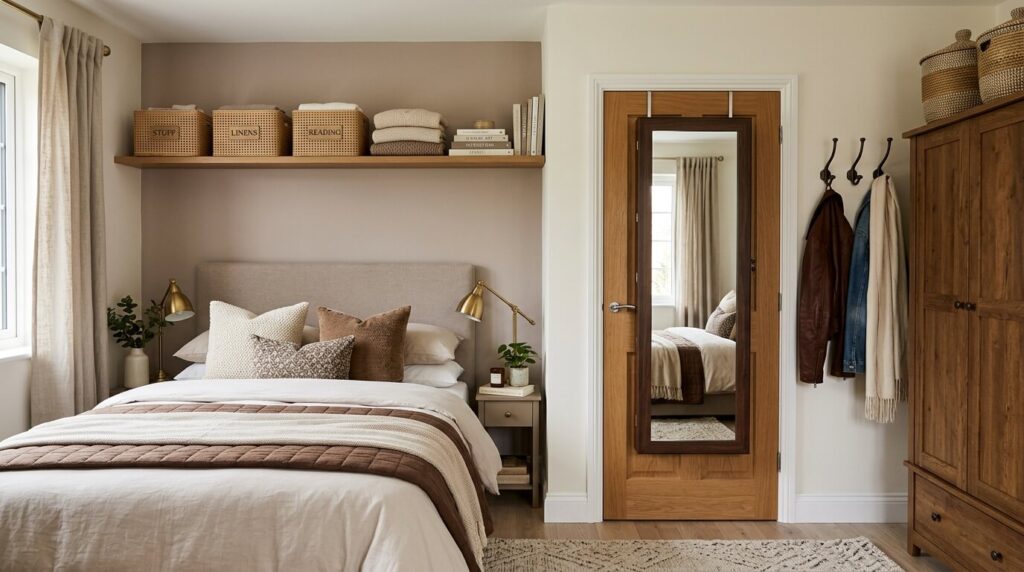
A row of floating shelves above the headboard, creates storage without using any additional floor space. Books, small décor, folded items in baskets and anything else that currently lives on a bedside table or on the floor beside the bed can live there instead.
The shelves should sit high enough to feel safe and comfortable while still remaining accessible. Heavy objects should be avoided directly above the bed, and all shelving should be securely anchored into the wall properly rather than mounted casually.
Overhead storage ledges
A deeper shelf or storage ledge mounted closer to ceiling height works well for long-term storage. A row of matching boxes with labels keeps it looking neat rather than cluttered.
In small bedrooms without a closet, this kind of overhead storage becomes especially valuable because it creates hidden capacity without adding another piece of furniture to the room.
Maximize the inside of the Wardrobe
Most wardrobes use their vertical space badly. A single hanging rail leaves a large amount of unused height both above and below it, which wastes storage capacity in a room that cannot afford waste.
Add a second hanging rail
Adding a second shorter rail beneath the main one, immediately doubles the hanging space for items that don’t need full hanging length like jackets, folded trousers and shirts.
The upper rail handles full-length items. The lower one handles shorter pieces. The floor of the wardrobe therefore becomes available for a small set of drawers or an organized shoe rack.
Use shelf dividers and stacking inserts
The shelving sections of most wardrobes have large gaps between shelves that waste the vertical space between them. Shelf dividers keep folded piles from toppling into each other. Stacking inserts effectively add an extra layer within the same shelf.
Both are small inexpensive upgrades, but they significantly improve how much the wardrobe can realistically hold.
Use the top interior shelf properly
The highest section inside the wardrobe interior is almost always empty or used as a dumping ground. A labelled box or two turn it into useful long-term storage for seasonal clothing or less-used items without affecting the rest of the room visually.
Install Floor-to-Ceiling Shelving Units
A tall narrow shelving unit is one of the most effective forms of wall storage for small bedrooms because it uses the room’s full height while taking up very little width.
Placed beside the wardrobe, at the end of the bed, or on a short wall, a floor-to-ceiling shelving unit can store books, baskets, folded clothing and decorative pieces one compact vertical column.
The narrow depth is ideal because deep shelving in a small room tends to become cluttered dead space where items disappear behind one another.
Matching containers also make a major difference visually. A shelving unit filled with random loose items reads as clutter. A shelving unit with coordinated baskets and boxes reads as an organized system.
Use the Back of Doors
The back of the bedroom door is a vertical surface that most rooms leave completely bare. From floor to the top of the door frame it’s a usable storage column that requires no drilling into walls and adds nothing to the room’s footprint.
Over-door hooks and pocket organizers
Over-door hooks at the top of the door handle bags, robes, towels and frequently worn outer layers where they’re visible and accessible.
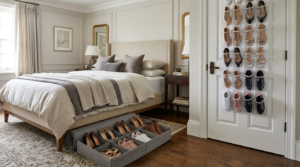
An over-door pocket organizer beneath that handles shoes, accessories and small items in a format where everything is visible without searching.
For more dedicated footwear solutions, the guide on how to store shoes in a small bedroom covers the over-door options alongside wall-mounted alternatives.
Over-door jewelry armoires
A mirrored over-door jewelry armoire is one of the most space-efficient storage pieces available for a small bedroom because it does three things in zero floor space. The front is a full-length mirror, genuinely useful in any bedroom.
The back opens to reveal a cabinet with hooks for necklaces and bracelets, compartments for rings and earrings, and shelves for watches and larger pieces. It replaces the jewelry box that would otherwise sit on a dresser or bedside surface, provides the mirror that would otherwise hang on a wall, and uses a surface the room wasn’t using at all.
For anyone with a meaningful jewelry collection, this is one of the few storage products that genuinely improves both organization and the overall look of the room.
Don’t Leave the Top of Furniture Empty
The tops of wardrobes, bookcases and tall shelving units are valuable storage surfaces in small bedroom, yet they are often either ignored completely or used badly.
A row of matching boxes or baskets above the furniture creates concealed long-term storage that feels intentional rather than messy. This works especially well for out-of-season clothing, spare bedding and infrequently used items.
The important thing is containment. Loose items piled above furniture make the room feel visually heavy very quickly. Uniform containers keep the upper part of the room looking calmer and more organized.
Common Vertical Storage Mistakes
The biggest mistake with floor-to-ceiling storage ideas is storing heavy items too high. Large or heavy boxes become difficult to lift safely and are far less likely to be used properly. Heavy items belong in the active and accessible zones. High storage should prioritize lightweight bulk, not weight.
Another common mistake is mixing storage heights randomly. Daily-use items should stay accessible, while occasional-use items move upward. Without logic, vertical storage creates friction instead of convenience.
Finally, avoid, overfilling every wall. Vertical storage works best when there is still some breathing room between shelves, furniture and decorative pieces. The goal is a room that feels lighter, not one where every vertical surface becomes visually crowded.
Start Just Above the Furniture Line
That’s the easiest place to begin when looking to use vertical space in a small bedroom. The metre of wall space directly above the furniture, the section that’s visible, within reach, and currently doing nothing, is the quickest win in the room and it costs nothing to use.
A shelf there, hooks behind the door, baskets on top of the wardrobe, or a narrow shelving column beside the bed: small additions at that height reveal how much unused capacity the room already has without requiring full redesign.
For a full picture of where the storage opportunities are across every zone of a small bedroom, the guide to small bedroom storage ideas for tight spaces connects the vertical storage with under-bed storage, concealed storage and layout planning.